Decision Snapshot
Start With the Short Answer
The best organic espresso beans still need to be good espresso beans first.
Organic espresso beans sound straightforward until you actually start shopping. Half the listings are built around health claims, half are built around vague tasting-note poetry, and very few of them explain the part that matters most: whether the coffee is actually easy to use for espresso.
My bias here is simple. I care about the organic label, but I care more about whether the bag produces dependable shots at home. A bean can be organic and still be a bad fit for espresso. So this guide is ranking organic options by how well they fit real home routines, not by how impressive the packaging sounds.
Key Takeaways
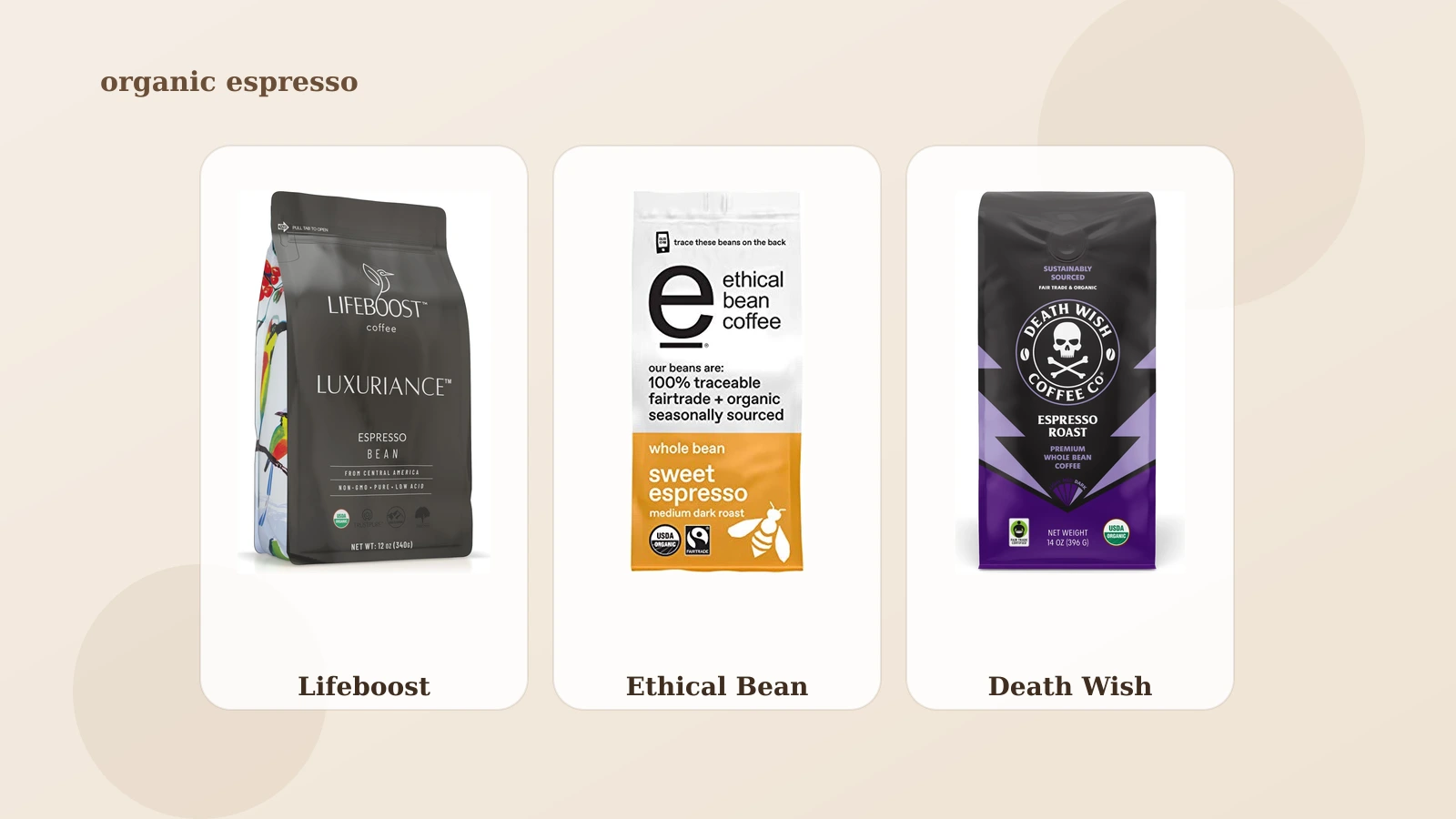
- Best overall:Lifeboost Organic Espresso is the most complete recommendation if you want a lower-acid organic bag that still feels espresso-specific.
- Best budget organic whole bean:Ethical Bean Sweet Espresso is the easiest lower-cost organic pick to recommend if you want a more traditional medium-dark lane.
- Best if you want a darker punchier cup:Death Wish Espresso Roast makes more sense for bold milk drinks than for delicate straight shots.
- Best grocery-style value option:Whole Foods Bel Canto is a practical fallback if convenience and decent espresso behavior matter more than boutique branding.
- Buying rule: Organic does not replace dial-in. If your grinder is inconsistent, a cleaner bag still will not fix sour or hollow shots by itself.
What Organic Actually Solves and What It Does Not
Organic coffee can be a meaningful buying preference, but it is not a shortcut to better espresso. It may help you align with your sourcing priorities, avoid certain agricultural practices, or choose brands with stronger transparency. It does not automatically mean the roast is better developed or the espresso fit is better matched to your grinder.
That matters because a lot of organic bean marketing tries to substitute ethics language for brew guidance. I do not want to reward that. A useful organic espresso recommendation still needs to tell you whether the bag works for milk drinks, straight shots, or low-acid preferences in an actual kitchen.
Best Overall: Lifeboost Organic Espresso
Lifeboost is the best overall organic espresso pick here because it does the strongest job of matching the organic promise with a cup profile people can actually live with. If lower acidity is part of why you care about the category, this is the easiest recommendation to understand.
The tradeoff is price. Lifeboost is not the bag you recommend to everyone looking for raw value. It is the bag you recommend to someone who already knows that stomach comfort, a smoother profile, and a cleaner-feeling cup matter enough to justify paying more.
Best Budget Organic Whole Bean: Ethical Bean Sweet Espresso
Ethical Bean is the better budget-minded organic recommendation because it feels like coffee first and marketing second. It is not as polished or premium as Lifeboost, but it gives buyers an easier entry point into the category without drifting into vague wellness copy.
This is the kind of bag that makes sense if you want a medium-dark espresso lane that can still work in milk drinks without feeling scorched or one-note. It is not a luxury pick, which is exactly why it is useful.
Best for Bold Milk Drinks: Death Wish Espresso Roast
Death Wish Espresso Roast is for people who want a darker, heavier, more forceful espresso personality. I would not call it the most elegant bag in this group, but elegance is not why someone buys Death Wish in the first place.
If your drinks are mostly cappuccinos, flavored lattes, or richer milk builds, this style can make more sense than a cleaner gentler roast that disappears once milk enters the glass. I would be more hesitant recommending it to straight-shot drinkers looking for clarity.
Best Practical Grocery-Style Option: Whole Foods Bel Canto
Whole Foods Bel Canto is the least glamorous recommendation here, which is also why it deserves to be included. Not every organic espresso buyer wants a boutique ritual. Some people want a decent, reorderable bag that behaves predictably enough to anchor the week.
That is the lane Bel Canto fills. It is not the most memorable, but it is a realistic pick for people who value dependable restocks more than chasing a conversation piece. That matters for actual home habits and repeat orders.
How I Would Choose Between Them
If you want lower-acid ease, buy Lifeboost. If you want budget sanity, buy Ethical Bean. If you want bolder milk-drink presence, buy Death Wish. If you want easy reordering, buy Bel Canto. That gets you farther than reading another paragraph of abstract tasting notes.
And if you are still not sure, step back and decide whether your real problem is the bean or the setup. Organic beans cannot rescue a grinder that cannot hold a dial-in or a recipe that changes every morning. Pair this with our best espresso beans for sale guide and our extraction time guide so the bag and the routine line up.
Whole Bean vs Ground Matters Even More in Organic Coffee
If you are paying extra for organic coffee, it makes even less sense to waste that advantage with the wrong format. Whole bean gives you the best chance of getting the flavor and freshness you paid for. Ground coffee gives you convenience, but it collapses the window for control immediately.
That does not mean ground organic coffee is automatically a mistake. It just means you should be honest about the setup. If you own a capable grinder, buy whole bean and protect the value of the bag. If you do not own a grinder and convenience is non-negotiable, then a good ground option can still be the better purchase for your reality.
This matters especially in the organic segment because some buyers come in valuing sourcing and health language so much that they forget to match the product format to the machine. A technically admirable bag that does not fit the setup still produces disappointing espresso.
What I Would Actually Rebuy
If I wanted the safest repeat purchase, I would rebuy Lifeboost or Ethical Bean depending on whether I cared more about lower acidity or budget. Those are the two recommendations that feel easiest to defend over time.
Death Wish is the more conditional rebuy because it depends more heavily on drink style. Bel Canto is the practical rebuy because it solves convenience and availability better than it solves distinction. None of those are insults. They are exactly the kind of differences that should shape real buying behavior.
The useful filter is simple: do you want a bag that feels cleaner and gentler, a bag that feels cheaper and solid, a bag that feels darker and heavier, or a bag that is simply easy to buy again? That is a better framework than arguing about which bag has the most morally satisfying description on the label.
Freshness Still Matters More Than Organic Marketing
The easiest way to waste an expensive organic bag is to treat the label as a substitute for freshness discipline. Even a thoughtful organic purchase loses a lot of value if the bag is old, poorly stored, or sitting pre-ground in a setup that expects fresh whole beans.
That is why I would rather see someone buy the slightly less romantic organic option that they can reorder and use consistently than buy a “cleaner” sounding bag that never quite fits the grinder, roast preference, or drink style. In practice, repeatability is part of quality.
Organic sourcing can absolutely be a real priority. It just should not hide the core buyer question: does this bag make your espresso routine easier to enjoy and easier to repeat?
Which Bag I Would Buy for Each Setup
If I had a smaller home machine and mostly made milk drinks, I would lean toward Ethical Bean or Death Wish before paying premium organic prices just for the label. Those bags make their case more through practical fit than through wellness-style positioning.
If I cared about a gentler lower-acid cup and knew I would actually notice the difference, Lifeboost becomes the more convincing spend. If I needed easy grocery-style repeatability and did not want to overthink the category, Bel Canto becomes more defensible than many “better on paper” bags because it fits the routine more honestly.
That is the wider point of this guide. Organic espresso is not one buyer lane. It breaks into at least four lanes: low-acid comfort, budget whole bean, bold milk-drink espresso, and practical repeat purchase. Once you pick the lane first, the bag choice becomes much less confusing.
And once you frame it that way, the category stops feeling like moral theater. You are not choosing the most righteous bag. You are choosing the one that most honestly fits your machine, palate, budget, and reorder habits.
Final Verdict
Technical DNA Comparison
If I had to name one winner, Lifeboost Organic Espresso is the strongest organic espresso recommendation because it feels the most coherent from buyer promise to cup result. But the smarter purchase still depends on your drink style and tolerance for price.
Organic espresso is worth doing well. It just should not turn into an excuse for weak buying advice. The best organic bean is the one that satisfies your sourcing standards and still makes you want to pull another shot tomorrow morning.
For current live picks and prices, browse the Espresso Insider product hub.
For a wider technical reference, Specialty Coffee Association research is still worth bookmarking. For broader coffee-quality and sensory context beyond this guide, the Specialty Coffee Association research archive is a useful reference point.
These are the active catalog products that still clear our usefulness gate for this topic right now.

JO ESPRESSO: 2 lb, Organic Whole Espresso Beans, USDA Certified Organic, Gluten Free, NON-GMO, Fair Trade Certified, Perfect Rich Thick Crema, Medium/Dark Roast Whole Bean Coffee by Jo Coffee®
JO ESPRESSO: 2 lb, Organic Whole Espresso Beans, USDA Certified Organic, Gluten Free, NON-GMO, Fair Trade Certified, Perfect Rich Thick Crema, Medium/Dark Roast Whole Bean Coffee by Jo Coffee® is a organic coffee built…
See Current Offer
Allegro Coffee Organic Espresso Sierra Whole Bean Coffee, 12 oz
Allegro Coffee's Organic Espresso Sierra offers a rich and full-bodied experience, characterized by dark chocolate and caramel nuances. This medium-dark roast is crafted to be the ideal foundation for a flavorful…
See Current Offer
Lifeboost Organic Espresso Whole Bean Coffee
Lifeboost Organic Espresso Whole Bean Coffee promises a low-acid, mycotoxin-free espresso experience sourced from Nicaraguan mountains. The beans are dark roasted and USDA certified organic, with claims of third-party…
See Current OfferFrequently Asked Questions
Before You Buy
Narrow the field to 2 to 4 options, compare the practical tradeoffs side by side, then click through to a retailer only after the choice is clear.