
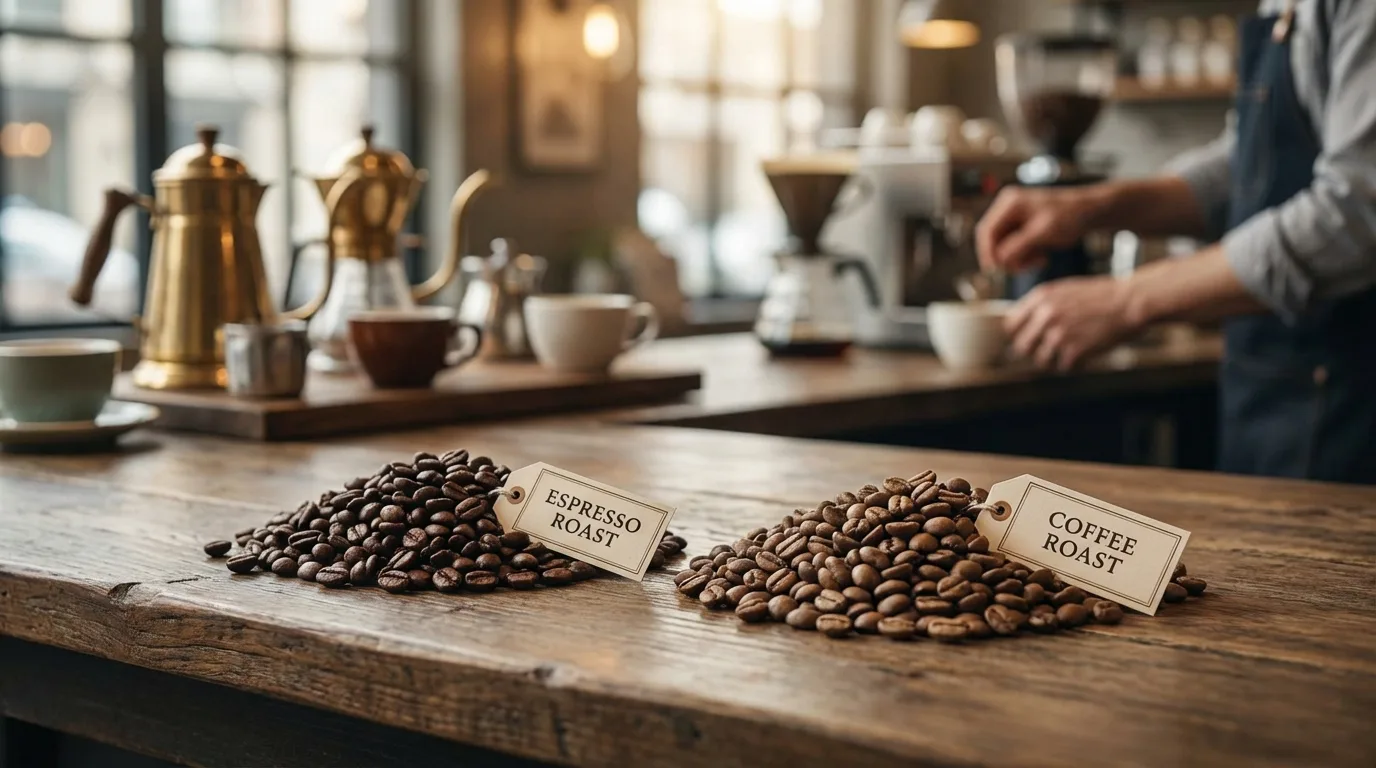
Quick Summary
Picture this: You’ve just invested in a shiny new espresso machine, watched countless YouTube tutorials, and you’re ready to pull your first shot at home. You grab a bag of coffee beans from your pantry—the same ones you use for your morning drip coffee—and wonder why your espresso tastes nothing like that perfect café experience you’re chasing.
Here’s the thing: not all coffee beans are created equal, especially when it comes to espresso. While technically any coffee bean can be used for espresso, the reality is far more nuanced. The difference between espresso beans vs coffee beans isn’t just marketing fluff—it’s the foundation of everything that makes a great shot.
I’ve been down this rabbit hole myself, and I’ve learned that understanding these differences is what separates okay home espresso from the café-quality shots we’re all after. Let me share what I’ve discovered about why espresso beans deserve their own category and how this knowledge can transform your home brewing game.
Key Takeaways – espresso beans vs coffee beans
- Espresso beans are specifically roasted and blended for the high-pressure extraction method, typically darker than regular coffee beans
- The grind size and extraction time for espresso require beans with different oil content and solubility than drip coffee
- Roast profiles matter immensely—espresso beans are usually medium-dark to dark roast to withstand the intense brewing process
- Bean freshness is critical for espresso, with optimal brewing occurring 7-14 days after roasting
- Blend composition often includes multiple origins designed to create balanced flavor and consistent crema
Understanding the Fundamentals: Espresso Beans vs Coffee Beans
What Makes a Bean an “Espresso Bean”?
Let’s clear up the biggest misconception first: espresso beans and coffee beans come from the same coffee plants. The difference isn’t botanical—it’s all about preparation, roasting, and intended brewing method.
When we talk about espresso beans, we’re really talking about coffee beans that have been:
- Roasted specifically for espresso brewing
- Blended or selected for optimal extraction under pressure
- Processed to achieve the right oil content for crema formation
- Timed for peak freshness during the espresso brewing window
Think of it like this: you wouldn’t use the same cut of meat for a quick stir-fry and a slow-braised stew, right? The cooking method demands different preparation. Espresso’s high-pressure, short extraction time creates unique demands that regular coffee beans aren’t optimized for.
The Science Behind the Pressure
Espresso brewing forces hot water through finely ground coffee at 9 bars of pressure in about 25-30 seconds. This intense process extracts flavors, oils, and compounds differently than the gentle, gravity-fed methods used for drip coffee or French press.
Regular coffee beans—especially lighter roasts—can taste sour or underdeveloped when subjected to espresso’s quick extraction. They simply don’t have the right structure to give up their flavors fast enough. Espresso beans are roasted to be more soluble, allowing for complete extraction in that short timeframe.
Why Roast Level Matters for Espresso
Here’s where things get really interesting. The roast level dramatically affects how beans behave under pressure, and this is where espresso beans vs coffee beans becomes crystal clear.
Light Roasts (Typically Drip Coffee):
- Higher acidity
- More complex, floral notes
- Denser bean structure
- Require longer extraction times
Medium-Dark to Dark Roasts (Espresso Territory):
- Lower acidity, more balanced
- Caramelized sugars create sweetness
- More porous structure for faster extraction
- Oils on surface contribute to crema
I learned this lesson the hard way when I first started making espresso at home. I was using these beautiful single-origin light roast beans that made incredible pour-over coffee. But in my espresso machine? Sour city. The beans weren’t roasted long enough to develop the solubility needed for proper espresso extraction.
The Sweet Spot: Medium-Dark Roasts
Most espresso blends hit that sweet spot between medium and dark roast—what we call “espresso roast” or “full city roast.” This level develops enough caramelization for sweetness and body while preserving enough origin character to keep things interesting.
At this roast level, the beans have:
- ✅ Sufficient oil development for crema formation
- ✅ Balanced acidity that won’t overwhelm
- ✅ Proper solubility for 25-30 second extraction
- ✅ Body and sweetness to stand up to milk
Grind Size: Where Espresso Gets Picky
The Fine Line of Espresso Grinding
If you’ve ever tried to use pre-ground coffee for espresso, you know the struggle. Espresso demands an extremely fine, consistent grind—much finer than what you’d use for drip coffee. But here’s the kicker: not all beans grind the same way.
Espresso beans are typically roasted to a level where they grind more uniformly at fine settings. Their structure breaks down more predictably, creating fewer fines (super tiny particles) that can clog your portafilter and create uneven extraction.
Regular coffee beans, especially lighter roasts, can be nightmare to grind for espresso. They’re denser and more brittle, often creating an inconsistent particle size distribution that leads to:
- Channeling (water finding easy paths through the coffee)
- Over-extraction of fines (bitter flavors)
- Under-extraction of larger particles (sour notes)
Grinder Compatibility
This is why many espresso enthusiasts invest in dedicated espresso grinders. The beans you choose need to work with your equipment, and espresso beans are formulated with this in mind.
The Freshness Factor: Timing is Everything
The Espresso Freshness Window
Here’s something that surprised me when I started getting serious about home espresso: espresso beans have a much narrower freshness window than regular coffee beans.
For Drip Coffee: Beans can taste great anywhere from 3 days to 3-4 weeks after roasting For Espresso: The sweet spot is typically 7-14 days after roasting
Why the difference? It comes down to CO2 degassing. Freshly roasted beans release CO2, and for espresso, you need just the right amount:
- Too fresh (0-6 days): Excessive CO2 creates uneven extraction and sour shots
- Just right (7-14 days): Balanced degassing allows for proper extraction
- Too old (3+ weeks): Lack of CO2 means flat shots with poor crema
This is why many roasters include roast dates on espresso bean packages—and why you should pay attention to them.
Blend vs. Single Origin: The Espresso Approach
Why Espresso Loves Blends
Walk into any traditional Italian café, and you’ll find they’re using blended espresso beans. There’s a reason for this that goes beyond tradition—blends offer consistency and balance that single origins often can’t match in espresso applications.
Typical Espresso Blend Components:
- Brazilian beans (60-70%): Body, sweetness, crema base
- Central American beans (20-30%): Brightness, complexity
- African or Indonesian beans (10-20%): Unique character notes
This combination creates a balanced flavor profile that works well both as straight espresso and with milk. Each component brings something different to the table, and master blenders adjust ratios to achieve specific flavor goals.
Single Origins in Espresso
That said, single-origin espressos have gained popularity in the specialty coffee world. When done right, they can showcase unique terroir and processing methods. However, they require more careful selection—not every single origin makes great espresso.
Good Single Origin Espresso Candidates:
- Brazilian pulped naturals
- Colombian washed coffees
- Guatemalan beans
- Some Ethiopian naturals
Challenging Single Origins for Espresso:
- Very light, acidic African coffees
- Highly floral or tea-like varieties
- Extremely dense, high-altitude beans
Why Crema Matters (And How Beans Affect It)
That beautiful golden foam on top of your espresso shot isn’t just for Instagram—crema is an indicator of proper extraction and bean freshness. But not all beans create crema equally.
Factors That Affect Crema:
- Roast level: Darker roasts generally produce more crema
- Bean freshness: Peak crema occurs 7-14 days post-roast
- Bean variety: Robusta produces more crema than Arabica
- Processing method: Natural processed beans often create richer crema
Many espresso blends include a small percentage of high-quality Robusta beans (5-15%) specifically for crema enhancement. While Robusta gets a bad rap in specialty coffee, when used judiciously in espresso blends, it adds body, crema, and caffeine without overwhelming the flavor.
Reading Your Crema
Good crema should be:
- Golden-brown in color (not too light or dark)
- Thick enough to support sugar for a few seconds
- Persistent, lasting several minutes
- Evenly distributed across the shot
If your crema is lacking, it might be time to reconsider your bean choice or check their roast date.
Practical Shopping: How to Choose Espresso Beans
What to Look for on the Bag
When you’re shopping for espresso beans, here’s what should catch your eye:
Essential Information:
- ✅ Roast date (not just “best by”)
- ✅ Roast level (medium-dark to dark)
- ✅ “Espresso” designation or brewing recommendations
- ✅ Bean origin(s) and blend information
- ✅ Grind recommendations
Red Flags:
- ❌ No roast date visible
- ❌ Beans look oily or dull
- ❌ Generic “coffee beans” labeling
- ❌ Extremely light roast for espresso use
- ❌ Flavored or artificially enhanced beans
Price vs. Quality Sweet Spot
You don’t need to break the bank for good espresso beans, but the cheapest option rarely delivers café-quality results. I’ve found the sweet spot for home espresso beans is typically $12-18 per pound from reputable roasters.
At this price point, you’re getting:
- Freshly roasted beans
- Quality sourcing and blending
- Proper roast development
- Consistent results
For those looking to compare different options, I recommend trying several blends from different roasters to find your preference profile.
The Economics of Espresso Beans
Cost Per Cup Reality Check
When you break down the cost of quality espresso beans, the economics are pretty compelling compared to café visits:
Quality Espresso Beans ($15/lb):
- ~80 double shots per pound
- Cost per double shot: ~$0.19
- Monthly cost (2 shots/day): ~$11.40
Café Espresso ($3.50/double shot):
- Cost per double shot: $3.50
- Monthly cost (2 shots/day): $210
The math is clear: even premium espresso beans pay for themselves quickly when you’re making café-quality espresso at home.
Building Your Bean Rotation
Rather than sticking to one espresso blend forever, I recommend building a rotation of 2-3 favorites. This approach:
- Prevents palate fatigue
- Lets you match beans to mood/season
- Helps you understand different flavor profiles
- Keeps your espresso journey interesting
For those interested in exploring different options, check out our product recommendations for curated espresso bean selections.
Advanced Considerations: Dialing In Your Beans
Extraction Variables
Once you understand the basics of espresso beans vs coffee beans, you can start fine-tuning your approach. Different beans require slight adjustments to achieve optimal extraction:
Brazilian-heavy blends might need:
- Slightly coarser grind
- Higher brewing temperature (200-202°F)
- Standard 25-30 second timing
African single origins might need:
- Finer grind
- Lower brewing temperature (195-198°F)
- Potentially longer extraction time
Seasonal Considerations
Coffee is an agricultural product, and seasonal variations affect even the most consistent espresso blends. Good roasters adjust their roast profiles throughout the year to maintain consistency, but you might notice subtle changes that require minor brewing adjustments.
This is part of what makes espresso fascinating—it’s a living, changing craft that rewards attention and experimentation.
Building Your Espresso Knowledge
Developing Your Palate
Understanding espresso beans vs coffee beans is just the beginning. As you develop your palate, you’ll start noticing:
- Subtle flavor differences between origins
- How roast profiles affect extraction
- Seasonal variations in your favorite blends
- The impact of processing methods on espresso character
Connecting with the Community
The espresso community is incredibly welcoming and knowledge-sharing. Whether through local coffee shops, online forums, or social media groups, connecting with other enthusiasts accelerates your learning curve.
Many roasters also offer cupping sessions or brewing classes that can deepen your understanding of how different beans behave in espresso applications. These experiences are invaluable for developing your palate and technique.
For more insights and community connection, visit our main site where we regularly share brewing tips and bean recommendations.
Troubleshooting Common Bean-Related Issues
When Your Shots Taste Off
Sometimes the issue isn’t your technique—it’s your beans. Here’s how to diagnose bean-related problems:
Sour Shots:
- Beans might be too fresh (under 7 days)
- Roast might be too light for espresso
- Beans might be past their prime
Bitter Shots:
- Over-roasted beans
- Beans might be stale
- Wrong grind size for bean density
Flat, Lifeless Shots:
- Definitely stale beans
- Poor quality beans
- Incorrect storage
Inconsistent Results:
- Mixed roast dates in your supply
- Inconsistent bean quality
- Storage issues causing uneven aging
The Reset Strategy
When nothing seems to work, sometimes the best approach is a complete reset:
- Buy fresh beans from a reputable source
- Start with basic parameters (18g in, 36g out, 27 seconds)
- Change only one variable at a time
- Keep detailed notes about what works
This systematic approach helps you understand how your specific beans behave and builds confidence in your brewing decisions.
The Future of Espresso Beans
Trends to Watch in 2025
The specialty coffee world continues evolving, and espresso bean trends reflect broader changes in coffee culture:
Sustainability Focus: More roasters are highlighting direct trade relationships and carbon-neutral shipping
Processing Innovation: Experimental fermentation and controlled processing methods are creating new flavor profiles specifically for espresso
Micro-Lot Espresso: Small-batch, single-farm espressos are becoming more accessible to home brewers
Technology Integration: QR codes on bags linking to brewing parameters and origin stories
What This Means for Home Baristas
These trends point toward more transparency, quality, and customization in espresso beans. As a home barista, this means:
- Better information about optimal brewing parameters
- More diverse flavor profiles to explore
- Stronger connections between farmers and consumers
- Enhanced tools for dialing in your perfect shot
Making the Investment Worthwhile
Beyond the Beans: Complete System Thinking
Understanding espresso beans vs coffee beans is crucial, but remember that great espresso requires system optimization:
The Trinity of Great Espresso:
- Quality beans (properly roasted and fresh)
- Proper equipment (grinder and machine)
- Consistent technique (timing, temperature, pressure)
Neglecting any one element undermines the others. Investing in great beans while using a poor grinder is like buying premium ingredients and cooking them poorly.
Setting Realistic Expectations
Even with perfect beans, mastering espresso takes time. I probably pulled hundreds of mediocre shots before consistently hitting great ones. The learning curve is part of the journey—embrace it rather than fighting it.
Realistic Timeline:
- Weeks 1-2: Learning basic operation, lots of experimentation
- Months 1-3: Developing consistency, understanding your equipment
- Months 3-6: Fine-tuning technique, exploring different beans
- 6+ months: Confident brewing, helping others learn
For additional guidance and troubleshooting tips, our FAQ section addresses many common questions that arise during this learning process.
Conclusion: Your Next Steps to Espresso Excellence
Understanding why espresso beans aren’t just “any coffee beans” is fundamental to brewing café-quality espresso at home. The differences in roast profile, grind behavior, extraction characteristics, and freshness requirements aren’t just technical details—they’re the foundation of everything that makes espresso special.
Here’s your action plan:
- Start with quality espresso beans from a reputable roaster with clear roast dates
- Buy smaller quantities more frequently to stay in that optimal 7-14 day window
- Experiment with different blends to understand your flavor preferences
- Keep detailed notes about what works with your specific setup
- Connect with the community to accelerate your learning
Remember, every café-quality shot you pull at home starts with the right beans. While technique and equipment matter enormously, choosing beans specifically designed for espresso gives you the foundation for success.
The journey from good to great espresso is ongoing, and understanding the relationship between beans and brewing is what separates casual coffee drinkers from confident home baristas. Your perfect shot is waiting—it just starts with the right beans.
Ready to explore more about creating exceptional espresso at home? Check out our complete guide to espresso equipment and techniques to continue building your expertise.
☕ FAQ — Espresso Beans vs Coffee Beans
Are espresso beans and coffee beans actually different?
Can I use regular coffee beans to make espresso?
Why are espresso beans usually darker?
What’s the difference in grind size between espresso and coffee?
How should I store espresso beans for maximum freshness?
Continue Exploring
Use these guides to compare alternatives, troubleshoot faster, and build a more consistent home espresso workflow.
Best Dual Boiler Espresso Machines Under $1000
Next GuideWhat Is Espresso Extraction and Why It Matters: Your Guide to Perfect Shots