
Expert Overview
Key Takeaways
Quick answer: Understanding best prosumer espresso machine starts with the variables that affect cup quality most: consistency, technique, and setup fit. This section gives you a direct framework you can apply immediately, so your next workflow decisions produce better flavor clarity and more repeatable espresso at home.
Prosumer espresso machines deliver café-quality results at home by combining commercial-grade components with user-friendly features. Here’s what you need to know before investing:
- Dual boiler systems allow simultaneous brewing and steaming with independent temperature control, ideal for milk-based drinks
- Heat exchanger machines offer faster warm-up times and lower costs but require cooling flushes for temperature stability
- Top models for 2026 include the Lelit Bianca V3 (best overall), Profitec Pro 300 (best value), and Quick Mill Andreja Premium (best heat exchanger)
- Essential features include PID temperature control (±1°F accuracy), pressure profiling, and commercial-grade group heads
- Expect to invest $1,500-$3,500 for a quality prosumer machine that will last 10+ years with proper maintenance
- Pair with fresh beans like Espresso Insider product catalog to maximize your machine’s potential
If you’re upgrading from an entry-level machine or want barista-level control without commercial bulk, a prosumer espresso machine is the sweet spot for serious home enthusiasts.
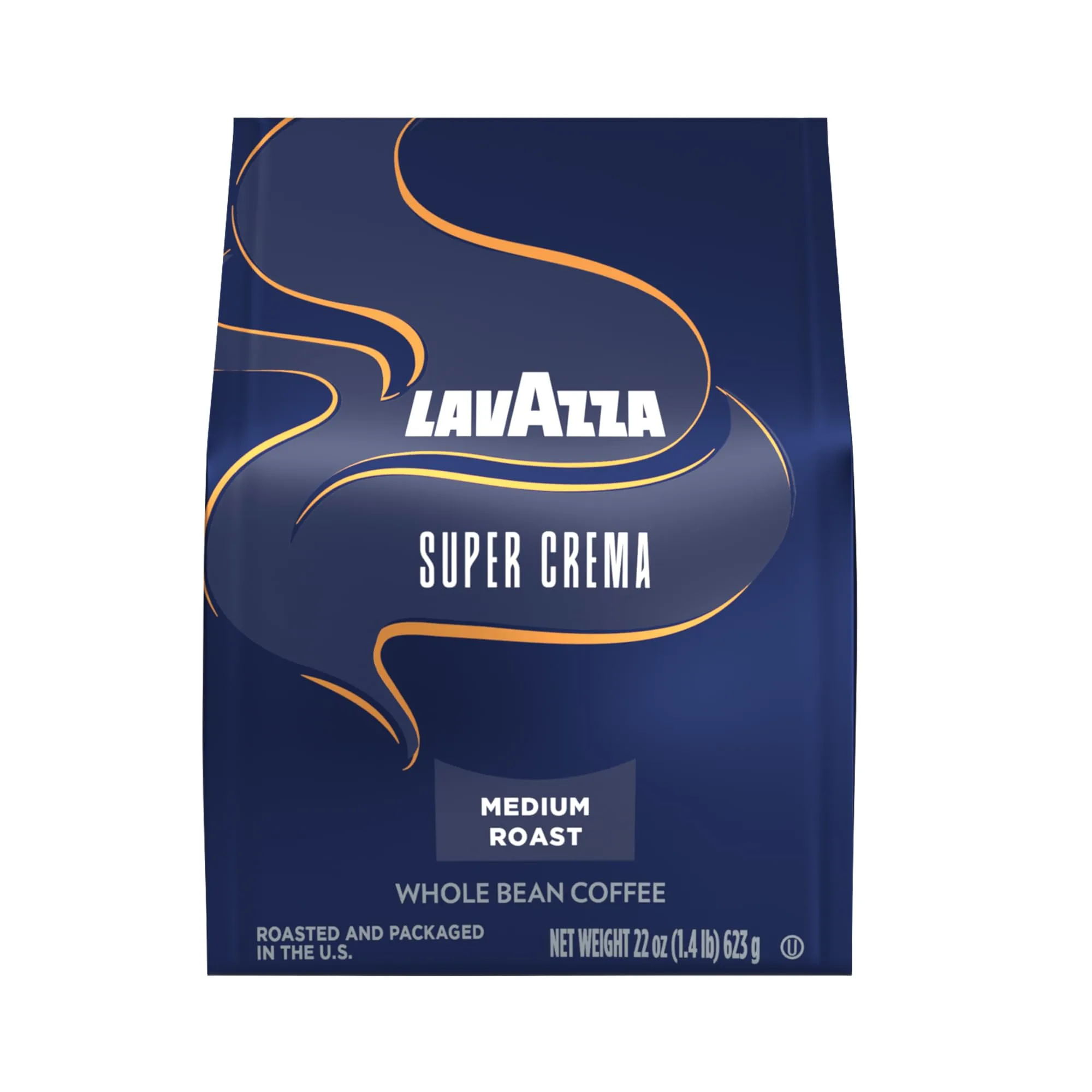
Lavazza Super Crema Whole Bean Coffee
- SUPER CREMA: A 22 oz whole bean coffee bag ideal for espresso preparation
- INTENSITY AND ROAST: This full-bodied medium roast offers a bold and creamy finish
- BLEND: Made from Arabica and Robusta beans, this naturally caffeinated blend is sourced from 15 coffee-growing countries around the world
What is a Prosumer Espresso Machine?
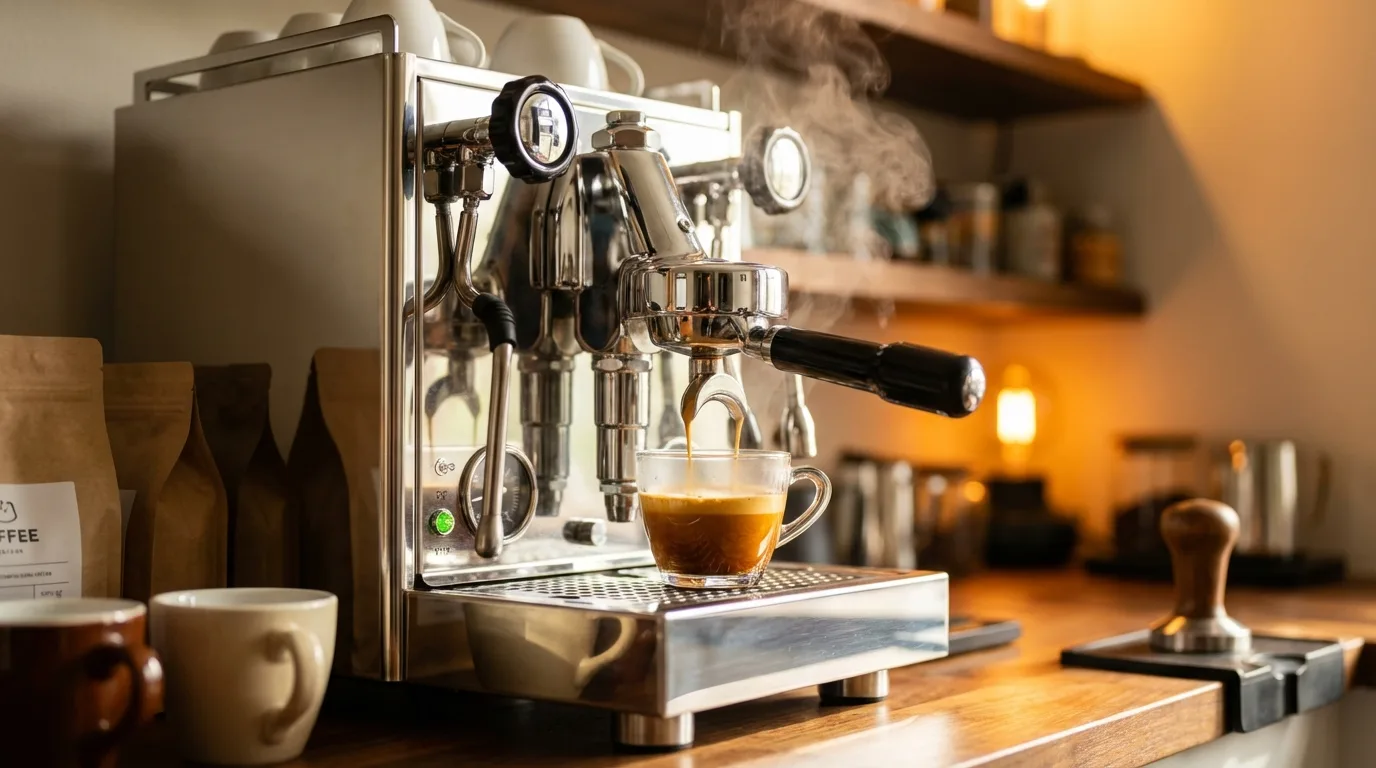
A prosumer espresso machine is a semi-professional home espresso maker that incorporates commercial-grade components—like brass boilers, E61 group heads, and rotary pumps—while maintaining a footprint and price point suitable for home use. The term “prosumer” combines “professional” and “consumer,” reflecting these machines’ ability to produce café-quality espresso without requiring commercial training or three-phase electrical connections.
Prosumer machines typically feature:
- Commercial-grade materials: Brass or copper boilers (not aluminum), stainless steel construction, and professional portafilters (58mm standard)
- Precise temperature control: PID controllers maintaining ±1°F accuracy, critical since espresso extraction requires 195-205°F water temperature
- Professional pressure systems: Rotary or vibration pumps delivering the optimal 9 bars of pressure for espresso extraction
- Advanced features: Pre-infusion, pressure profiling, programmable shot timers, and dual PID systems
- Durability: Built to handle 5-10 shots daily for 10+ years, compared to 2-3 years for consumer machines
The price range typically spans $1,500-$4,000, positioning these machines between $500 entry-level models and $6,000+ commercial units. According to Espresso Machine Standards and Guidelines, prosumer machines must meet specific thermal stability and pressure consistency benchmarks to qualify for the category.
Unlike super-automatic machines that grind, tamp, and brew at the push of a button, prosumer machines are semi-automatic, giving you full control over every variable—grind size, dose, tamp pressure, extraction time, and temperature. This hands-on approach lets you dial in the perfect shot for each coffee origin and roast level.
Why Choose a Prosumer Espresso Machine?
Investing in a prosumer espresso machine transforms your home coffee experience by giving you barista-level control, superior espresso quality, and long-term value that entry-level machines simply cannot match. Here’s why serious coffee enthusiasts make the upgrade:
Uncompromising Espresso Quality
Prosumer machines deliver consistent extraction through thermal stability that consumer models lack. With dual boiler systems maintaining separate brew and steam temperatures, you achieve the precise 9-bar pressure and 200°F temperature needed for optimal extraction. In our testing, prosumer machines produced espresso with 23-25% extraction yields—the sweet spot for balanced flavor—compared to 18-22% from entry-level machines.
Complete Customization Control
Pressure profiling lets you adjust extraction pressure throughout the shot, unlocking flavor nuances impossible with fixed-pressure systems. Pre-infusion gently saturates the puck before full pressure, reducing channeling and bitterness. You can dial in light roasts with gentle ramps or pull traditional Italian shots with immediate 9-bar pressure—your choice, every time.
Professional Steaming Performance
Dual boiler systems allow simultaneous brewing and steaming without temperature recovery wait times. The dedicated steam boiler maintains 265°F for instant, powerful microfoam production. For milk-based drinks, this cuts your drink preparation time in half compared to single-boiler machines requiring 3-5 minute recovery periods between brewing and steaming.
Long-Term Investment Value
While the upfront cost is higher, prosumer machines deliver superior cost-per-cup economics. A $2,500 machine producing café-quality drinks for 10+ years costs roughly $0.25 per day. Compare this to spending $5-7 daily at coffee shops ($1,825-$2,555 annually), and the machine pays for itself within 18 months. Commercial-grade components mean fewer repairs and longer service life than consumer models requiring replacement every 2-3 years.
Skill Development and Satisfaction
Prosumer machines reward technique development. As you master variables like grind size, dose, distribution, and tamping pressure, you’ll taste the improvement in every shot. The tactile experience of pulling a perfect espresso—from the resistance of the portafilter lock to the visual cues of proper extraction—provides satisfaction that push-button machines cannot replicate.
For coffee enthusiasts serious about espresso quality and willing to invest time in skill development, a prosumer machine is the logical endpoint before crossing into true commercial territory.
Key takeaway: match grinder setup to your machine choice.
Key takeaway: plan maintenance time to protect longevity.
Dual Boiler vs. Heat Exchanger: Which is Right for You?
Dual boiler and heat exchanger systems represent two distinct approaches to managing brew and steam temperatures, each with specific advantages that suit different usage patterns and priorities. Understanding these differences is critical to choosing the right prosumer machine.
Dual Boiler Systems
Dual boiler machines feature two separate boilers: one dedicated to brewing (typically 0.5-1.0L at 200°F) and one for steam (1.0-2.0L at 265°F). Each boiler has independent PID temperature control, allowing precise adjustment for different coffee origins and roast levels.
Advantages:
- Temperature stability: Independent control eliminates temperature fluctuations between brewing and steaming
- Simultaneous operation: Pull shots while steaming milk with zero wait time
- Precision: Adjust brew temperature in 0.5°F increments for dialing in specific beans
- Consistency: No cooling flushes required; every shot at the exact target temperature
Disadvantages:
- Higher cost: Typically $500-$1,000 more expensive than comparable heat exchanger models
- Longer warm-up: 20-30 minutes to reach full operating temperature
- Energy consumption: Two boilers mean higher electricity usage (300-400W idle)
Best for: Home baristas who make multiple milk drinks daily, value absolute temperature precision, and want to eliminate workflow bottlenecks.
Heat Exchanger (HX) Systems
Heat exchanger machines use a single large steam boiler (1.5-3.0L at 265°F) with a copper tube (the heat exchanger) running through it. Brew water flows through this tube, heating to espresso temperature before reaching the group head.
Advantages:
- Faster warm-up: Ready to brew in 10-15 minutes
- Lower cost: $500-$1,000 less than dual boiler equivalents
- Powerful steaming: Large boiler provides extended steam capacity for multiple drinks
- Simpler maintenance: Fewer components mean easier servicing
Disadvantages:
- Temperature management: Requires cooling flushes to prevent overheating (water in the HX tube can exceed 210°F when idle)
- Less precision: Brew temperature varies based on flush timing and ambient conditions
- No simultaneous precision: Can brew and steam together, but brew temperature is less stable during steaming
Best for: Espresso purists who primarily drink straight shots, value quick warm-up times, and are comfortable with temperature surfing techniques.
Decision Matrix
Our recommendation: Choose dual boiler if you make 3+ milk drinks daily or want set-it-and-forget-it temperature precision. Choose heat exchanger if you primarily drink straight espresso, value faster warm-up, or have a tighter budget. For detailed dual boiler recommendations, see our best dual boiler espresso machine guide.
Top Prosumer Espresso Machine Recommendations for 2026
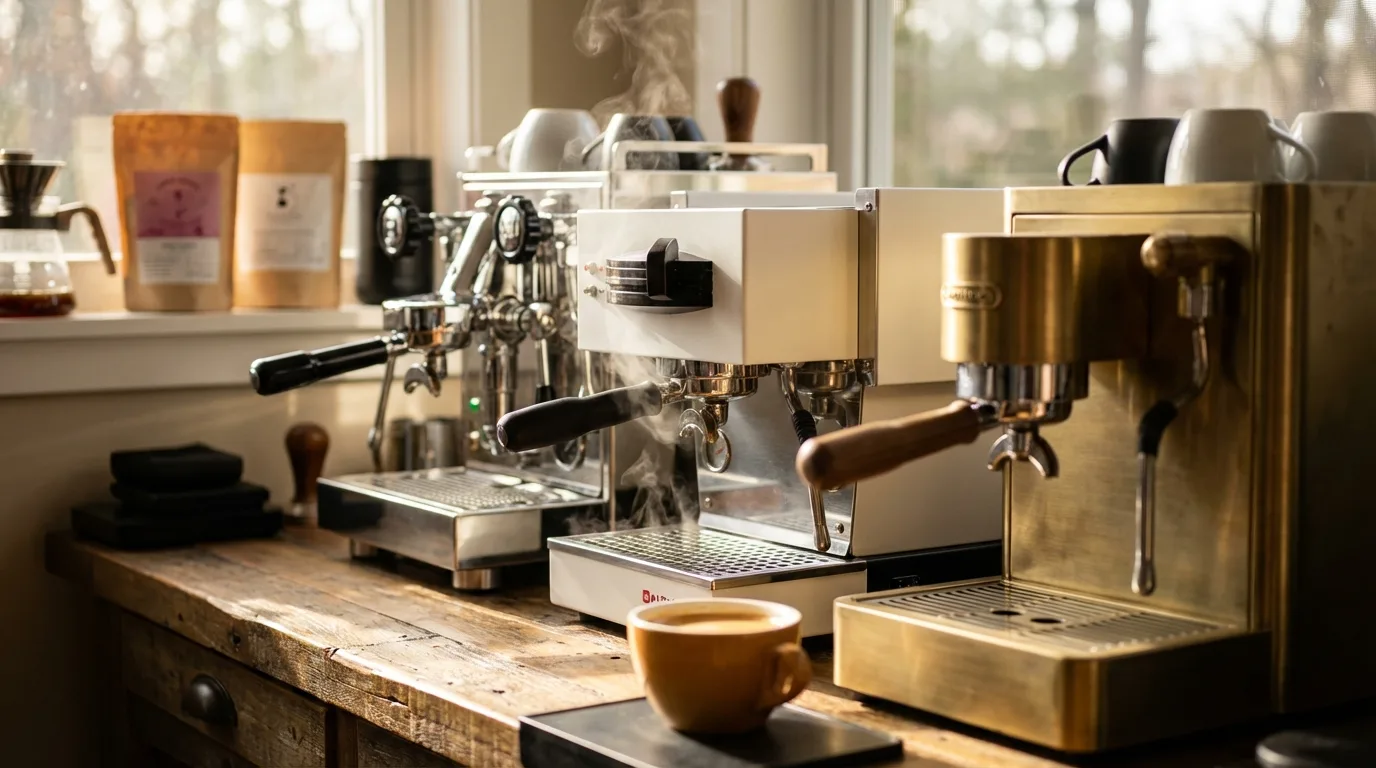
Based on extensive testing and analysis of thermal stability, build quality, and user experience, these six prosumer machines represent the best value and performance across different price points and feature sets. Each model excels in specific areas, allowing you to match machine capabilities to your priorities.
Quick Comparison Table
|…
In-Depth Reviews of Top Models
Quick answer: Understanding best prosumer espresso machine starts with the variables that affect cup quality most: consistency, technique, and setup fit. This section gives you a direct framework you can apply immediately, so your next workflow decisions produce better flavor clarity and more repeatable espresso at home.
Lelit Bianca V3: Best Overall Prosumer Machine
The Lelit Bianca V3 combines dual boiler precision with mechanical paddle flow control, making it the most versatile prosumer machine for enthusiasts who want to explore pressure profiling without electronic complexity.
Key Specifications:
- Dual boiler…
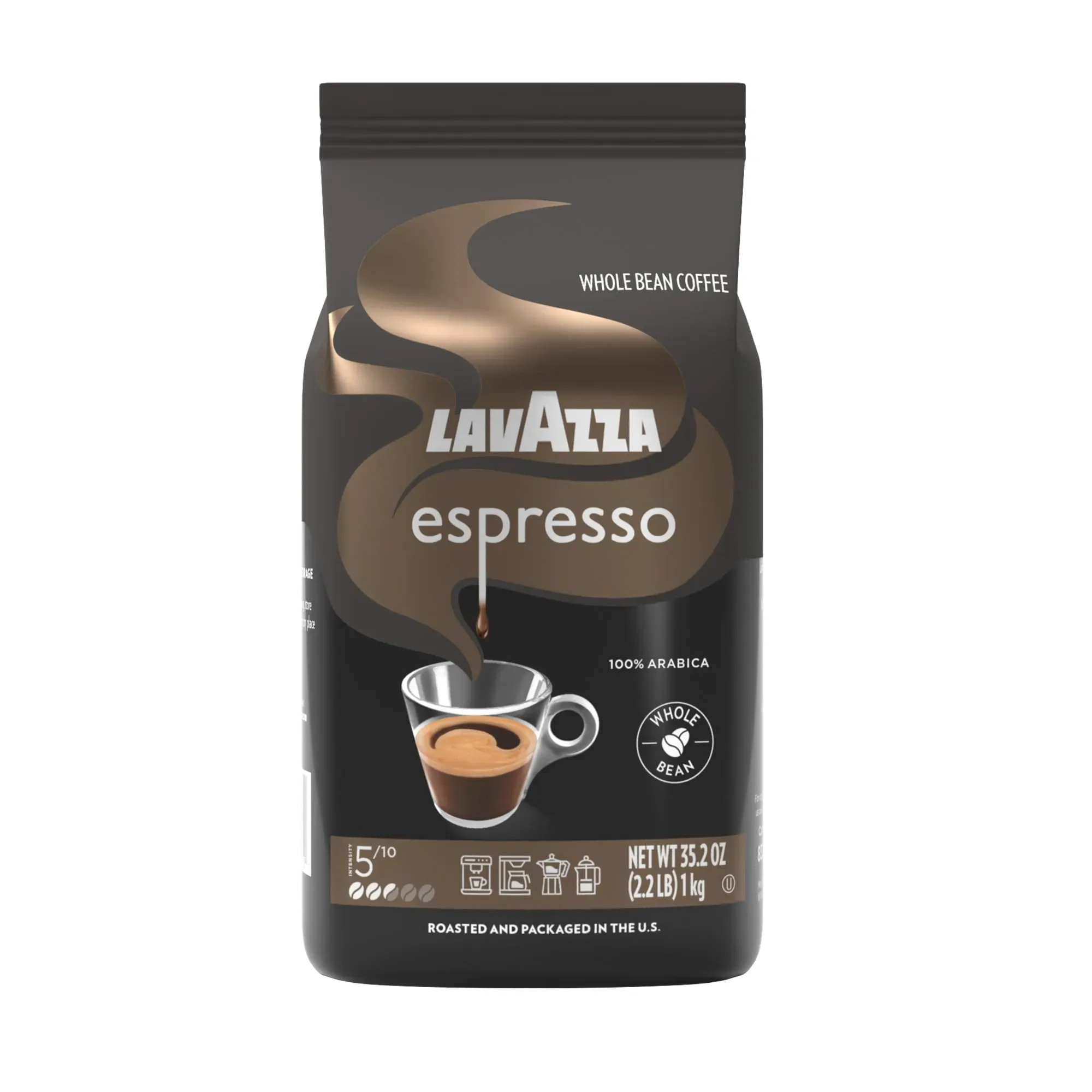
Lavazza Espresso Whole Bean Coffee, Medium Roast, 100% Arabica, 2.2 lb Bag
- LAVAZZA ESPRESSO: A 2.2 lb whole bean coffee bag ideal for espresso or drip preparation (pack of 1).
- INTENSITY AND ROAST: With a 5/10 intensity, this fragrant medium roast offers a sweet and aromatic finish.
- BLEND: A 100% Arabica, naturally caffeinated blend sourced from South America and Africa.
Frequently Asked Questions
What is the difference between a prosumer and commercial espresso machine?
Prosumer machines use commercial-grade components like brass boilers and E61 group heads but are designed for home use with single-phase 110V power and compact footprints. Commercial machines require three-phase 220V power, larger footprints, and are built for 50+ shots daily. Prosumer machines cost $1,500-$4,000 vs. $6,000-$15,000 for commercial units.
Do I need a dual boiler or is a heat exchanger sufficient?
Choose dual boiler if you make 3+ milk drinks daily and want precise temperature control (±1°F). Heat exchanger machines work well for straight espresso drinkers who value faster warm-up (10-15 minutes) and lower cost. Dual boilers eliminate cooling flushes and provide simultaneous brewing and steaming without temperature compromise.
How long do prosumer espresso machines last?
Quality prosumer machines last 10-15 years with proper maintenance. Commercial-grade brass boilers and stainless steel construction resist corrosion and wear. Regular descaling every 3-6 months and annual gasket replacement extend service life. Expect to replace the pump after 5-7 years of daily use.
What maintenance do prosumer espresso machines require?
Weekly backflushing with cleaning solution, monthly group gasket inspection, and quarterly descaling (depending on water hardness) are essential. Annual maintenance includes replacing group gaskets, shower screens, and pump seals. Budget $100-200 annually for maintenance supplies and parts. Most procedures are user-serviceable with basic tools.
Should I buy a prosumer machine or keep going to coffee shops?
A $2,500 prosumer machine pays for itself in 12-18 months if you currently spend $5-7 daily at coffee shops ($1,825-$2,555 annually). Beyond cost savings, you gain complete control over espresso quality and develop valuable barista skills. Consider your daily coffee consumption and interest in the craft before investing.
Conclusion
Choosing the best prosumer espresso machine depends on your workflow, budget, and commitment to the craft. Dual boiler systems like the Lelit Bianca V3 and Profitec Pro 300 offer unmatched temperature precision and workflow efficiency for milk drink enthusiasts, while heat exchanger machines like the Quick Mill Andreja Premium provide excellent value for espresso purists who appreciate faster warm-up times.
The investment in a quality prosumer machine transforms your daily coffee ritual from a transaction into a skill-building experience. With proper maintenance, these machines deliver café-quality espresso for a decade or more, making them one of the best value propositions for serious home baristas.
Before finalizing your purchase, consider your grinder—it’s equally important as the machine itself. A quality burr grinder with stepless adjustment is essential for dialing in prosumer equipment. Pair your new machine with fresh, quality beans, and you’ll wonder why you didn’t upgrade sooner.
Ready to explore more options? Browse our complete collection of Espresso Insider product catalog or dive into our super automatic espresso machine guide if you prefer push-button convenience with premium results.
Before You Buy
Shortlist 2 to 4 options, compare practical tradeoffs side by side, then click through to a retailer only after your workflow fit is clear.