
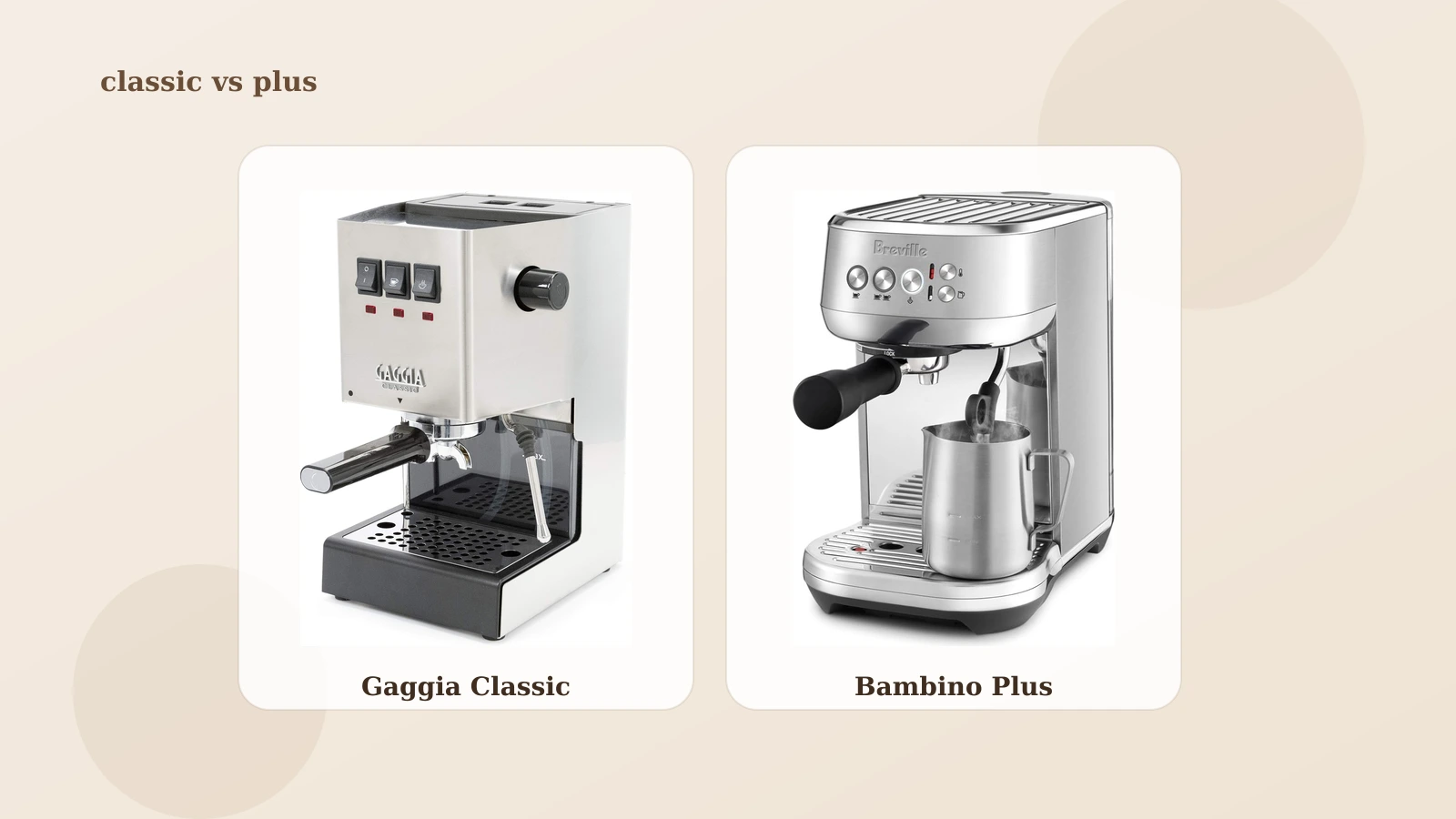
Decision Snapshot
Start With the Short Answer
The Bambino Plus is the better buy for most normal buyers, while the Gaggia Classic Pro is the better buy for people who already know they want a long-term espresso hobby. Convenience and milk routine favor Breville.
The Gaggia Classic Pro and the Breville Bambino Plus sit in roughly the same money band, but they are not solving the same problem. One is a compact convenience machine that removes friction. The other is a more old-school 58mm platform that asks more from you and gives more back if you stay in the hobby.
My blunt take is that people usually choose between these two for the wrong reason. They compare specs instead of comparing mornings. If you want fast cappuccinos before work, the Bambino Plus is the better machine. If you already know you care about mod potential, parts availability, and a more traditional routine, the Gaggia still makes more sense long term.
Key Takeaways
- Buy the Breville Bambino Plus if you want the easier daily machine. It heats almost instantly, the auto milk system is genuinely useful, and it lowers the odds that you give up after a week of sour shots and mediocre foam.
- Buy the Gaggia Classic Pro if you care more about the platform than the convenience. The 58mm ecosystem, repairability, and long ownership runway are still the main reasons it keeps winning over serious hobbyists.
- Best milk-drink machine: The Bambino Plus wins because it turns milk drinks into a low-friction routine.
- Best long-term tinkerer machine: The Gaggia wins because it ages better if you plan to keep learning espresso instead of treating it like an appliance.
- What most buyers miss: Warm-up rhythm and cleanup matter more than pressure claims. One machine you use happily every day beats a theoretically better one that feels annoying before breakfast.
Quick Answer: Which One Should You Buy?
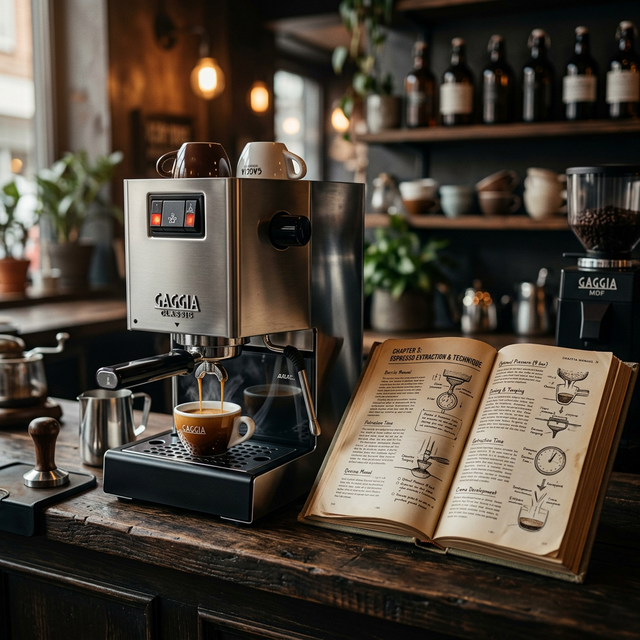
The Bambino Plus is the better buy for most normal people, while the Gaggia is the better buy for people who already know they want to stay in espresso. That is the simplest honest answer. The Bambino Plus smooths out the routine. The Gaggia gives you a more serious platform, but it asks for more patience and a little more tolerance for ritual.
If you are stuck because internet espresso culture keeps telling you that the more traditional machine is automatically the more respectable one, ignore that pressure. Convenience is not a character flaw. A machine that gets used consistently is worth more than a machine that wins forum arguments and collects dust.
Where the Bambino Plus Wins
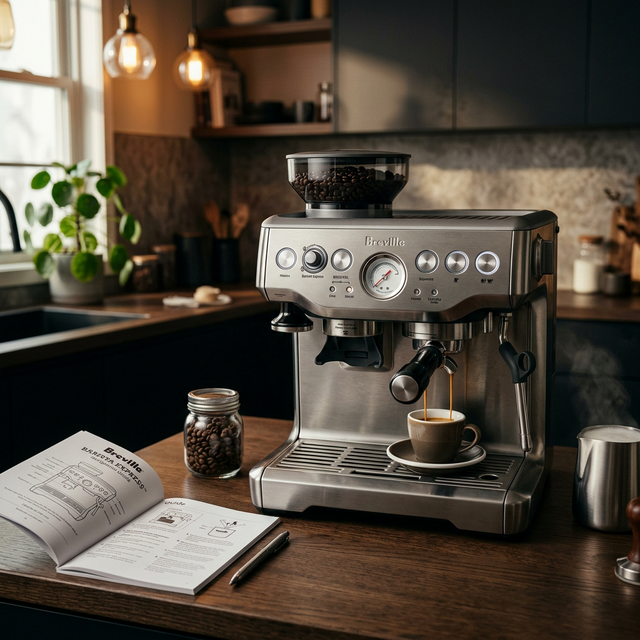
The Bambino Plus wins on speed, milk routine, and day-to-day forgiveness. It is the machine I would recommend to someone who wants the smallest path between craving a cappuccino and actually drinking one.
The fast heat-up matters more than spec nerds want to admit. Machines that are annoying to start become weekend machines. The Bambino Plus avoids that trap. The automatic steam wand is also more useful than the usual “beginner convenience” add-on because it actually lowers friction without forcing you into fake one-button espresso.
The downside is that you are buying into a compact appliance-style platform. The 54mm ecosystem is workable, but it is not the same as stepping into the broader 58mm world. If your idea of fun is later upgrading baskets, tampers, bottomless portafilters, and machine internals, you will hit that ceiling sooner.
Where the Gaggia Classic Pro Wins
The Gaggia wins if you value the platform more than the polish. It feels less like a shortcut appliance and more like a machine you grow into. That is still its entire appeal, and it is a real appeal.
The 58mm routine gives you a better long-term tool path. Parts support is stronger. The machine is easier to think about as a platform rather than a sealed consumer purchase. If you already suspect that home espresso might become a hobby, the Gaggia is easier to justify because it will not feel toy-like after your first few months.
But I would not romanticize the tradeoff. The Gaggia asks for more warm-up discipline, more manual involvement, and more tolerance for a slightly rougher ownership experience. The wrong buyer calls that “serious.” The right buyer calls it “worth it.” There is a difference.
Milk Drinks, Straight Shots, and Real Routines
Your drink habits should decide more of this comparison than your identity as a beginner or enthusiast. If your week is mostly lattes, flat whites, and cappuccinos, the Bambino Plus keeps winning because the milk side is easier and faster.
If your routine leans more toward straight shots and you enjoy the ritual itself, the Gaggia becomes more compelling. Not because it automatically produces better espresso, but because it gives you a routine that stays interesting as your standards rise. The Bambino Plus is easier to outgrow mentally than the Gaggia, even if its cup quality remains respectable.
This is also where your grinder matters. Pairing either machine with a weak grinder is the fastest way to waste the comparison. If your grinder budget is still unresolved, read our best espresso grinder under $300 guide before treating the machine choice like the only important decision.
What I Would Do With My Own Money
I would buy the Bambino Plus for a faster life and the Gaggia for a longer hobby. That sounds obvious, but many comparison pages refuse to say it that directly.
If I wanted one compact machine for weekday milk drinks and clean ownership, I would take the Bambino Plus and move on. If I wanted a machine that still felt interesting after a year of better beans, better grinders, and more specific technique opinions, I would take the Gaggia and accept the slower pace.
What I would not do is buy the Gaggia because I felt guilty about liking convenience. I also would not buy the Bambino Plus if I already knew I was the type to obsess over baskets, preheating, and platform longevity. Both mistakes come from buying for an imagined future version of yourself instead of your actual routine.
Ownership Friction, Space, and Maintenance
The Bambino Plus usually wins the first month, while the Gaggia can win the third year. That is the easiest way to think about ownership friction.
The Bambino Plus is friendlier in small kitchens because it heats quickly, stores easily, and makes it less painful to squeeze espresso into a normal weekday. The Gaggia asks you to think more about preheating, accessories, and counter rhythm. None of that is fatal, but it is real. If your kitchen is already crowded or your espresso window is tight, those small frictions matter.
Maintenance is also different in feel even when neither machine is outrageous. The Bambino Plus feels more appliance-like: you keep it clean, use it, and move on. The Gaggia invites a more involved ownership mindset. Some buyers love that because it feels durable and serviceable. Others slowly resent it because they never wanted a relationship with their machine in the first place.
That is why I keep calling this a routine decision, not a spec decision. The better machine is the one whose maintenance style you will tolerate without needing espresso to become a personal project every weekend.
Which Buyer Actually Regrets Each One?
The buyer who regrets the Bambino Plus usually wanted a hobby platform, while the buyer who regrets the Gaggia usually wanted easier coffee before work. Framing the decision that way is more useful than another feature grid.
Bambino regret usually happens when someone is already drifting into better grinders, precision baskets, and forum-style upgrade thinking. The machine still works, but it starts feeling like the compact appliance in a setup that is otherwise becoming more intentional. Gaggia regret is the opposite. The buyer likes the idea of espresso depth more than the daily ritual required to enjoy it.
If you know your attention span for morning coffee is short, buy for ease and let your grinder carry more of the quality burden. If you know you genuinely enjoy the process and want to keep learning, buy for runway. That single self-honesty check prevents more wasted money than most machine reviews do.
Pairing Each Machine With the Right Grinder
The machine decision gets easier once you match it to a realistic grinder budget. A Bambino Plus paired with a capable sub-$500 grinder often makes more sense than stretching for a more “serious” machine and leaving the grind quality mediocre.
The Gaggia becomes easier to defend when the rest of your setup is also pointing toward a longer hobby: better burrs, more deliberate puck prep, and some willingness to tinker. If your grinder plan is still modest and your drink habits are milk-heavy, the Bambino Plus keeps winning because it lets the setup feel coherent faster.
That is why I would rather see a buyer choose the simpler machine with a smarter grinder than choose the more “enthusiast-approved” machine and underfund the part of the setup that actually stabilizes shot quality.
It also changes the budget psychology. Buyers often frame this comparison like the machine is the only long-term decision, but in practice the grinder and accessories determine how forgiving either platform feels. A well-paired Bambino Plus setup can feel more satisfying than a poorly paired Gaggia setup for a very long time.
Who Should Skip Both Machines
You should skip both machines if your grinder budget is unresolved or if what you really want is one-button convenience. These machines both assume at least some interest in puck prep, recipe control, and learning what a better shot tastes like.
If your real goal is “press a button and get a milk drink,” you may be happier with a different category altogether. If your real goal is “start building a proper setup,” then these two make more sense. The mistake is buying into a semi-automatic routine when you do not actually want one.
Likewise, do not stretch for either machine while leaving yourself with stale pre-ground coffee or a grinder that cannot dial espresso well. The machine comparison becomes much less important once your grind quality falls apart. That is not glamorous advice, but it is the kind that actually prevents wasted money.
Final Verdict
Technical DNA Comparison
| Feature | Gaggia RI9380/49 Classic Evo Pro Espresso Machine, Thunder Black, Small | Breville Bambino Plus Espresso Machine BES500BSS, Brushed Stainless Steel |
|---|---|---|
| Price | $501.25 | $399.95 |
| Rating | (0) | ★★★★ (2677) |
| See Current Offer → | See Current Offer → |
For most buyers, the Breville Bambino Plus is the smarter recommendation because it gets you to good espresso with less friction and fewer excuses. For the smaller group that wants a platform to grow with, the Gaggia Classic Pro remains the better long game.
If you want another useful tie-breaker, pair this comparison with our best espresso machine for beginners guide and our espresso extraction time explainer. The better machine is the one that still makes sense after you understand how your shots actually taste.
For current live picks and prices, browse the Espresso Insider product hub.
For a wider technical reference, Specialty Coffee Association research is still worth bookmarking. For wider equipment and extraction context beyond this article, the Specialty Coffee Association research archive is a credible technical reference.
These active catalog matches are the current live listings worth checking while you read this comparison.

Gaggia RI9380/49 Classic Evo Pro Espresso Machine, Thunder Black, Small
Gaggia RI9380/49 Classic Evo Pro Espresso Machine, Thunder Black, Small is a semi-automatic espresso machine built around Solid Steel Housing, Made in Italy, 9 Bar Espresso Extractions, GTIN: 075020090645. This looks…
See Current Offer
Breville Bambino Plus Espresso Machine BES500BSS, Brushed Stainless Steel
The Breville Bambino Plus (BES500BSS) is broadly regarded as the definitive entry-level prosumer machine due to its groundbreaking combination of automated features and rapid heating. Driven by Breville’s proprietary…
See Current OfferFrequently Asked Questions
Before You Buy
Narrow the field to 2 to 4 options, compare the practical tradeoffs side by side, then click through to a retailer only after the choice is clear.