
Decision Snapshot
Start With the Short Answer
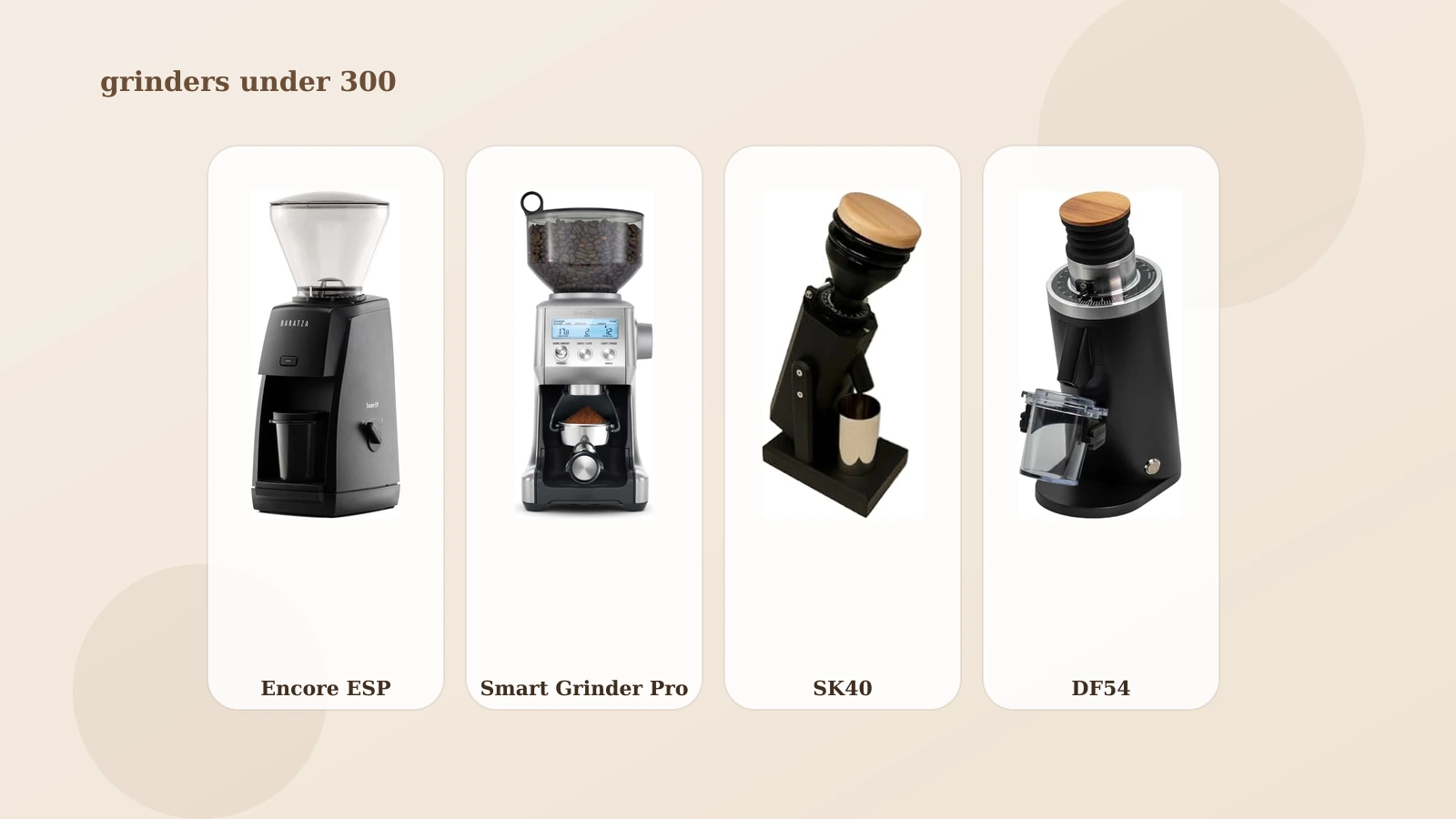
The best espresso grinder under $300 for most home baristas is the Baratza Encore ESP. It is the cleanest balance of espresso range, ease of use, support, and price.
The best espresso grinder under $300 is the grinder that helps you dial in fast, stay consistent when beans change, and keep the morning routine from turning into a static-filled mess. That matters more than burr diameter flexing or spec-sheet theater.
This price band is where a lot of buyers get misled. There are now real espresso-capable grinders under $300, but there is also a lot of clutter: generic conical-burr boxes, weak stepped grinders, and flashy listings that say “espresso” without giving you the kind of adjustment control espresso actually needs. The useful question is not whether a grinder can grind fine. The useful question is whether you can move from a sour 20-second shot to a balanced 28-second shot without guessing blindly.
Key Takeaways
Buy the Baratza Encore ESP if you want the safest electric recommendation. Buy the Breville Smart Grinder Pro if timed dosing and easier multi-drink routine matter more than purity. Buy the Turin SK40 if you already want a true single-dose routine. Buy the DF54 if you are willing to spend closer to the ceiling for a more serious flat-burr path. Buy the 1Zpresso J-Ultra if manual grinding does not bother you and you want outstanding espresso precision. Buy the KINGrinder K6 if you want the cheaper manual value option.
That is the short answer. The longer answer is about routine. Hopper grinders, single-dose grinders, and manual grinders do not fit the same buyer. If you choose the wrong routine, a technically good grinder can still feel like a bad purchase.
Key Takeaways: Best Espresso Grinders Under $300
- Best overall for most home espresso users:Baratza Encore ESP is the easiest recommendation because the espresso range is clear, the parts support is strong, and the routine stays approachable.
- Best if you want timed dosing and easy daily use:Breville Smart Grinder Pro still makes sense if convenience matters more than chasing the newest single-dose trend.
- Best single-dose pick under $300:Turin SK40 gives you a cleaner, lower-retention style routine without jumping above the budget ceiling.
- Best flat-burr stretch pick:DF54 is the option to watch if you want a more serious single-dose upgrade path under $300.
- Best premium manual grinder:1Zpresso J-Ultra is the strongest hand-grinder pick if you value fine espresso adjustment more than speed.
- Best manual value pick:KINGrinder K6 is the budget-friendly manual route if you want capable espresso grinding without spending J-Ultra money.
- The common mistake: Buyers obsess over burr shape or click count before deciding whether they actually want hopper convenience, single-dose routine, or manual grinding.
Best Overall: Baratza Encore ESP
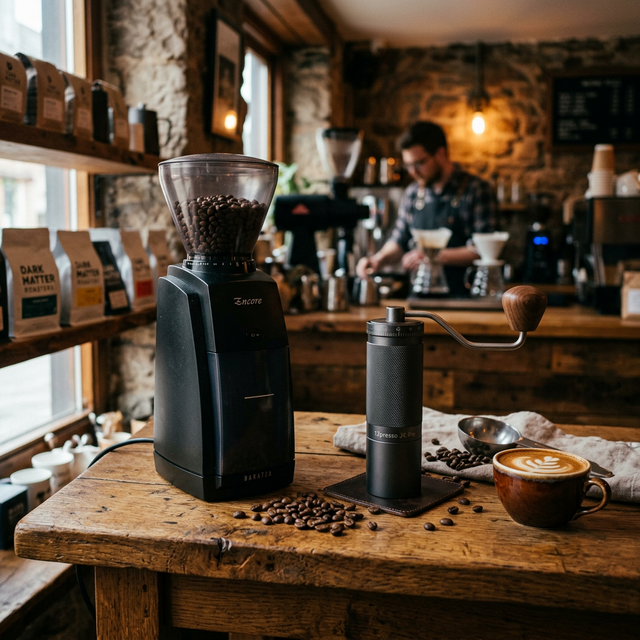
The Baratza Encore ESP is the safest under-$300 electric grinder for most home espresso buyers because it solves the right problem clearly. It gives you an espresso-capable range that is easy to understand, it avoids gimmicks, and it comes from a platform with real parts support and long-term familiarity.
That matters more than people admit. A lot of entry grinders under this budget are frustrating not because they are too cheap, but because the adjustment logic is vague. The ESP is easier to live with because you can move through the espresso range with a reasonable sense of cause and effect. For a new setup, that saves beans, time, and patience.
Who should buy it: anyone building a first serious home espresso setup and wanting the least risky electric choice. Who should skip it: buyers who already know they want single-dosing, stepless adjustment, and a more “espresso-first” ritual from day one.
Best for Timed Dosing and Easier Daily Use: Breville Smart Grinder Pro
The Smart Grinder Pro is still relevant because convenience is a real buying criterion, not a moral weakness. If you make multiple drinks, share the kitchen, or value timed dosing directly into the portafilter, it can be the better purchase than a more fashionable single-dose grinder.
The Smart Grinder Pro is not the cleanest choice for purists. It is a practical choice for people who want a grinder that integrates into a normal weekday routine without making every dose feel like a tiny laboratory session. Its programmability and portafilter support still make it one of the easiest grinders to recommend in the “I actually need this to be convenient” lane.
Who should buy it: people making daily milk drinks and wanting a smoother electric routine. Who should skip it: buyers who want low-retention single dosing, a simpler path to bellows-style routine, or a more stripped-down espresso-first grinder.
Best Single-Dose Pick Under $300: Turin SK40
The Turin SK40 is the most convincing answer under $300 if what you really want is a proper single-dose routine. It is not trying to be an appliance grinder for every coffee style first. That is why it appeals to people who already know they care about lower retention, stepless adjustment, and cleaner espresso-focused dialing in.
Single-dose grinders are not automatically better for every buyer, but they are often better for buyers who want to change beans, measure precisely, and keep stale retention lower without constant cleanup irritation. The SK40 gives you that style of ownership before you move into a higher price bracket.
Who should buy it: anyone who already prefers to weigh every dose and wants a more intentional espresso routine. Who should skip it: people who want the easiest “leave beans in the hopper and go” routine.
Best Flat-Burr Stretch Pick: DF54
The DF54 is the grinder to consider if you are comfortable spending near the top of this budget and want a more serious single-dose path. The reason it stands out is not just that it uses flat burrs. It stands out because it pushes the under-$300 segment closer to a grinder category that used to start meaningfully higher.
That does not make it the automatic winner. The DF54 is less “plug in and stop thinking” than the Encore ESP, and it is less convenience-oriented than the Smart Grinder Pro. But if your buying logic is already pointing toward single-dose espresso first, the extra spend can make sense because it changes the kind of grinder you are buying, not just the brand on the front.
Who should buy it: buyers who want to maximize espresso-first capability inside this budget ceiling. Who should skip it: anyone who still wants the simplest first grinder, or who would be better served spending less on the grinder and keeping more room for beans or machine budget.
Best Manual Grinder for Espresso Precision: 1Zpresso J-Ultra
The J-Ultra is the best manual espresso grinder in this price class if you care about fine control more than speed. If manual grinding does not annoy you, it gives you the kind of espresso-specific precision that makes many cheaper electric grinders feel clumsy.
The real appeal is not romance. It is clarity. There is very little retention, the adjustment is fine enough for espresso work, and the value is strong if you make one or two drinks at a time. The obvious downside is effort. That is not minor. Manual grinding is still manual grinding. For the right buyer it feels satisfying. For the wrong buyer it becomes the part of the routine they start avoiding.
Who should buy it: solo drinkers, travel-minded users, and people willing to trade convenience for precision. Who should skip it: households making several drinks back-to-back, or anyone who already knows they want push-button convenience.
Best Budget Manual Value: KINGrinder K6
The KINGrinder K6 is the manual grinder to buy when you want to spend less than the J-Ultra without falling into the usual cheap hand-grinder trap. It is the value play, not the prestige play, and that is exactly why it belongs here.
This is the grinder for buyers who understand that the grinder matters more than accessory clutter, but who still want to keep the total setup budget under control. It gives you real espresso relevance at a lower entry cost. The compromise is refinement: the J-Ultra still feels like the sharper espresso tool, while the K6 makes its case by being cheaper without becoming useless.
Who should buy it: budget-sensitive buyers who are open to manual grinding and want the strongest value move. Who should skip it: anyone who already knows they hate repetitive hand grinding or wants a more polished manual experience.
How to Choose Between These Grinders
The fastest way to make the right choice is to decide your routine first. If you are still stuck between two or three grinders, the tie-breaker is usually not burr geometry. It is whether you want hopper convenience, single-dose ritual, or manual precision.
- Choose Encore ESP if you want the safest first electric grinder and the strongest support story.
- Choose Smart Grinder Pro if timed dosing and weekday convenience matter more than trendier grinder identity.
- Choose Turin SK40 if you want single-dose espresso routine without immediately moving above this budget.
- Choose DF54 if you are deliberately stretching for a more serious flat-burr-style single-dose path.
- Choose J-Ultra if you want manual precision and do not mind the work.
- Choose K6 if your setup budget is tight and manual grinding is acceptable.
If you are building the whole setup, do not treat the grinder as an isolated purchase. Pair this guide with our best espresso machine for beginners guide and our best espresso machine under $500 roundup so your machine and grinder actually make sense together.
What Actually Changes Your Shots
The biggest grinder win is not better marketing language. It is tighter control over extraction. When the grind is more consistent and easier to adjust precisely, the shot gets easier to diagnose. That means you stop wasting mornings asking whether the problem is the bean, the machine, or your tamp when the real problem is that the grinder cannot land in the right range.
That is also why espresso-specific adjustment matters. According to the Specialty Coffee Association’s standards and research resources, small changes in brewing variables materially affect cup quality. In practical home terms, a grinder with clumsy espresso adjustment makes those small corrections harder to repeat. A grinder with better control turns the process into feedback instead of confusion.
If your shots still taste sour or harsh after choosing a capable grinder, the next step is not another purchase. It is learning what your cup is telling you. Read our espresso extraction time guide before you assume a pricier grinder is the next answer.
Who Should Skip This Price Range
You should skip the under-$300 grinder category entirely if you already know you want a long-term prosumer grinder with fewer compromises. This range is good now, much better than it used to be, but it is still a compromise tier. The point is to buy the right compromise, not pretend compromise has disappeared.
You should also skip this tier if you are tempted by ultra-cheap blade grinders or generic “espresso” grinders that hide the adjustment details. Those do not solve the same problem. They just create bad shots faster. A coherent sub-$300 grinder is still far better value than a random cheap grinder paired with a better machine.
Final Verdict
Technical DNA Comparison
For most home baristas, the Baratza Encore ESP is the best espresso grinder under $300 because it balances espresso capability, usability, and long-term support better than anything else in this bracket. The Smart Grinder Pro remains the better fit for convenience-focused buyers, the Turin SK40 is the best lower-cost single-dose route, the DF54 is the stretch pick if you want a more serious espresso-first grinder, and the J-Ultra remains the best manual precision option.
The right purchase is the one that matches the way you brew honestly. That is the whole game. If you want the next step after choosing a grinder, head to our product hub for the current catalog or use the guides above to build a machine-and-grinder setup that makes sense together.
For current live picks and prices, browse the Espresso Insider product hub.
These are the active catalog products that still clear our usefulness gate for this topic right now.

Neretva Espresso Grinder
The Neretva Espresso Grinder aims to deliver precision grinding for various brewing methods, from espresso to French press. Featuring stainless steel conical burrs and 30 distinct grind settings, this grinder focuses on…
See Current Offer
AMZCHEF Single Dose Coffee Grinder with 75 Settings & 40mm Burrs | Anti-Static Espresso Grinder for Home Use | Low Retention Magnetic Outlet | Quiet DC Motor | Vacuum Dosing Cup | LED Light
AMZCHEF Single Dose Coffee Grinder with 75 Settings & 40mm Burrs | Anti-Static Espresso Grinder for Home Use | Low Retention Magnetic Outlet | Quiet DC Motor | Vacuum Dosing Cup | LED Light is a single dose grinder…
See Current Offer
SHARDOR Super Silent Coffee Grinder, Herb, Spice, Electric Coffee Bean & Espresso Grinder with 1 Removable Stainless Steel Bowl
SHARDOR Super Silent Coffee Grinder, Herb, Spice, Electric Coffee Bean & Espresso Grinder with 1 Removable Stainless Steel Bowl is a electric burr grinder built around 【Press to Start】When you press down on the lid, the…
See Current OfferFrequently Asked Questions
Before You Buy
Narrow the field to 2 to 4 options, compare the practical tradeoffs side by side, then click through to a retailer only after the choice is clear.