
Decision Snapshot
Start With the Short Answer
The Barista Pro ($800) upgrades the Express ($600) with ThermoJet instant heating (3 sec vs 30 sec), a digital temperature display, and a slightly improved grinder. The Pro is worth the $200 for convenience and daily speed.
The Breville Barista Express and the Barista Express Impress are perhaps the most-discussed entry-to-mid-range
espresso machines on the market — but the machine most enthusiasts actually face when stepping up is the
Breville Barista Express vs the Barista Pro. Same integrated grinder concept, same 54mm portafilter
ecosystem, significantly different internals and controls.
This comparison breaks down every meaningful difference so you can invest correctly the first time.
Key Takeaways

Both machines combine a built-in conical burr grinder with an espresso machine in a single footprint. The pitch:
grind directly into the portafilter with one machine instead of owning two separate appliances. For
counter-space-limited kitchens or those who want to start pulling shots without a dedicated grinder, this
integration is genuinely brilliant.
Both machines use a 54mm portafilter (compatible with Breville’s full accessory ecosystem), a thermocoil heating
system, and a dedicated steam wand. The internal guts differ meaningfully.
Heating System: Thermocoil vs ThermoJet
This is the most operationally significant difference. The Barista Express uses a thermocoil heating
system that takes approximately 30–45 seconds to warm up and can suffer from temperature instability between
back-to-back shots.
The Barista Pro uses Breville’s newer ThermoJet system, which heats to brew temperature in just 3
seconds. Not a gimmick — ThermoJet also allows near-instantaneous switching between brew temperature and steam
temperature, so you can steam milk immediately after pulling a shot without waiting for the boiler to repressurize.
For those making multiple milk drinks in sequence, this is a genuine quality-of-life upgrade.
Interface: Analog vs Digital
The Barista Express uses physical knobs and a pressure gauge. The Barista Pro uses an OLED digital display showing
temperature, shot time, and grind settings. If you prefer working with tactile controls you can adjust without
looking, the Express is comfortable. If you want to precisely manage temperature in degrees Celsius and save
presets, the Pro’s digital interface is far more capable.
Temperature Control
The Express has a temperature adjustment function (3 steps via a dial), but it’s imprecise — you’re setting a target
without knowing the exact temperature. The Pro’s PID-adjacent temperature control directly shows the set temperature
in degrees Celsius with five fine-tuning increments. For light roast espresso, which requires higher brew
temperatures (96–98°C), the Pro gives you the precision to actually hit the target.
The Grinder
Both machines use the same internal conical burr grinder with 16 grind size settings. In practice, the Barista Pro’s
grinder has a slightly redesigned chute that reduces (but doesn’t eliminate) static clinging. Both machines have a
known limitation: 16 grind settings is not very many, and moving between adjacent settings produces a relatively
large change in resistance. Serious espresso enthusiasts eventually want a standalone grinder with stepless
adjustment — but for beginners, the integrated grinders on both machines are functional and capable.
Steam Wand Performance
The Express has a traditional steam wand — slightly less powerful but still capable of producing quality microfoam
with practice. The Pro’s steam wand benefits from the ThermoJet system, which delivers steam more quickly and at a
higher temperature without the wait. Side-by-side, the Pro produces microfoam somewhat faster, but both are
competent for home use.
Price Difference and Value Judgment
The Barista Pro typically costs $200–300 more than the Barista Express at retail. Is it worth it?
- Buy the Express if: You’re on a tighter budget, you prefer analog controls, or you’re happy
with medium-dark espresso blends that don’t demand precise temperature management. - Buy the Pro if: You want to explore light roast single origin espresso, you make multiple milk
drinks daily and hate waiting between shots, or you prefer the precision of a digital display and temperature
readout.
Accessories Compatibility
Both machines use the same 54mm portafilter. This means the entire ecosystem of third-party accessories — bottomless
portafilters, precision baskets, puck screens, dosing funnels — applies identically to both. This is a genuine
advantage of the Breville platform: the accessory market is mature, affordable, and well-reviewed.
For current live picks and prices, browse the Espresso Insider product hub.
routine and ownership friction
Breville Barista Express vs Barista Pro only becomes clear when you compare what living with each option actually feels like.
Spec sheets hide the parts that annoy you every morning: heat-up rhythm, retention, noise, cleanup, refill direction, and how easy it is to recover from a bad setting move.
I have made the mistake of buying for the headline advantage and then resenting the product because the daily routine felt worse than the small taste gain justified.
That is why we keep comparing these matchups against adjacent cluster guides like our best espresso machines under $500 instead of pretending one page can replace the whole ownership decision.
Taste, drink style, and daily routine
Breville Barista Express vs Barista Pro should be judged by the drinks you make most often, not by comment-section mythology.
If your daily coffee is milk-heavy before work, the easier and more forgiving option can honestly be the better buy even if the enthusiast crowd prefers the more demanding tool.
If you chase straight-shot clarity, lower retention, or tighter grind control, then the extra friction can be worth it because the cup changes in a direction you will actually notice.
The mistake is acting like one winner can serve every buyer equally well. Good comparison content should split the audience on purpose.
Upgrade path and long-term fit
Breville Barista Express vs Barista Pro also separates based on what kind of owner you will be six months from now.
Some products stay satisfying because they keep the routine simple. Others stay satisfying because they leave more room to obsess over precision and technique. Those are different kinds of value.
There is no shame in wanting convenience. The bad move is buying the control-heavy option while secretly wanting less management, or buying the easy option while already craving a steeper learning curve.
For more context on that tradeoff, compare the related lessons in our beginner machine guide and our Barista Express vs Barista Pro guide.
Which one we would buy and why
Breville Barista Express vs Barista Pro needs a firm buyer split, not a vague tie.
If the routine rewards speed, lower friction, or easier recovery from mistakes, we would pick the simpler option and move on. That is not settling. That is buying for reality.
If the buyer clearly values the extra control or clarity enough to live with the tradeoffs, then the more demanding option becomes the right answer for a very specific reason.
That kind of blunt verdict is what most ranking pages avoid, but it is exactly what readers need when they are choosing with real money.
What changes once you stop reading spec sheets
Breville Barista Express vs Barista Pro: Is the Upgrade Worth $200? makes more sense when you judge it the way an owner would, not the way a forum would.
Spec sheets flatten products into neat boxes, but the lived experience is messier. Warm-up rhythm, dial-in confidence, cleanup friction, and noise can outweigh a headline feature once the routine becomes normal.
That is why we are comfortable being opinionated here. A technically stronger option can still be the wrong recommendation if its daily friction is higher than the payoff for the buyer we are actually talking to.
Good comparison content should help someone spend money with fewer regrets, not just sound balanced on paper.
A realistic one-week ownership verdict
Technical DNA Comparison
| Feature | Breville Barista Express Espresso Machine BES870XL | Breville Barista Pro Espresso Machine BES878BTR, Black Truffle |
|---|---|---|
| Price | $549.95 | $849.95 |
| Rating | ★★★★ (27301) | (0) |
| See Current Offer → | See Current Offer → |
Breville Barista Express vs Barista Pro: Is the Upgrade Worth $200? makes more sense when you judge it the way an owner would, not the way a forum would.
After a week, the strengths that looked abstract become obvious. Either the product suits the routine and quietly earns trust, or it starts to feel like another thing you have to manage before coffee.
That is the right time horizon for a comparison verdict. Not the first excited shot, but the moment where you notice whether the routine feels sensible before work on a normal Tuesday.
If a product still feels like the right call at that point, the recommendation has a much better chance of holding up long term.
For a wider technical reference, Specialty Coffee Association research is still worth bookmarking. For wider equipment and extraction context beyond this article, the Specialty Coffee Association research archive is a credible technical reference.
These active catalog matches are the current live listings worth checking while you read this comparison.

Breville Barista Express Espresso Machine BES870XL
Breville Barista Express Espresso Machine BES870XL is a semi-automatic espresso machine built around The Breville Barista Express delivers third wave specialty coffee at home using the 4 keys formula and is part of the…
See Current Offer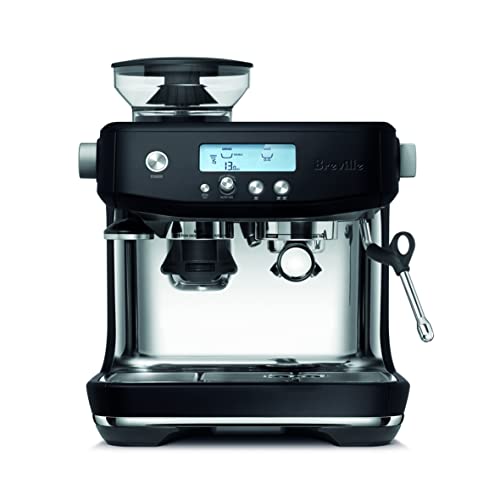
Breville Barista Pro Espresso Machine BES878BTR, Black Truffle
Breville Barista Pro Espresso Machine BES878BTR, Black Truffle is a semi-automatic espresso machine built around The Breville Barista Pro delivers third wave specialty coffee at home using the 4 keys formula and is part…
See Current OfferFrequently Asked Questions
Before You Buy
Narrow the field to 2 to 4 options, compare the practical tradeoffs side by side, then click through to a retailer only after the choice is clear.