
Decision Snapshot
Start With the Short Answer
An espresso and an Americano can look almost identical in a paper cup at a coffee shop — both are dark, both are served black, and both are built on espresso as their foundation.
An espresso and an Americano can look almost identical in a paper cup at a coffee shop — both are dark, both are
served black, and both are built on espresso as their foundation. But they taste completely different and are built
from entirely different extraction philosophies. Understanding the distinction helps you order correctly and helps
barista-minded home brewers understand when to use each.
Key Takeaways
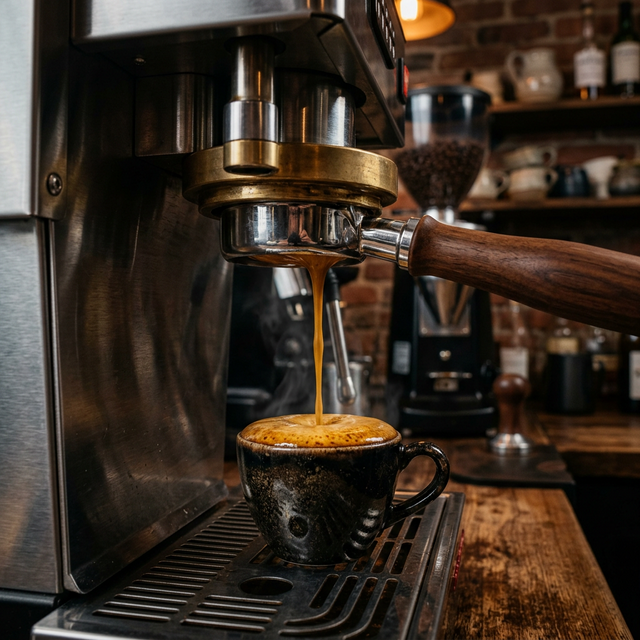
A standard espresso shot is 25–35ml of liquid extracted from 7–20g of coffee (depending on the style) in 25–35
seconds at 9 bars of pressure. The result is an intensely concentrated, syrupy liquid — thicker than any other
coffee format — coated with a layer of golden crema.
Espresso’s defining characteristics:
- High TDS (Total Dissolved Solids): Between 8–12%, meaning a massive percentage of the liquid in
your cup is dissolved coffee material. For comparison, filter coffee sits at 1.2–1.5%. - Full emulsion: The 9-bar pressure emulsifies coffee oils into the liquid, giving espresso its
characteristic heavy texture. - Short drinking window: Espresso flavor degrades rapidly. Drink it within 90 seconds of pulling
or the crema collapses and oxidation begins to flatten the flavors.
Americano: The Espresso Diluted
An Americano is espresso with hot water added after extraction. Typically: one or two shots of espresso with
120–180ml of hot water added. The name comes from American soldiers stationed in Italy during World War II who found
Italian espresso too concentrated and added water to approximate the longer coffee they were accustomed to at home.
Adding water to espresso has several effects:
- Reduces concentration: The TDS drops from ~10% to roughly 1.5-2% — much closer to drip coffee
territory. - Preserves crema: Unlike filter coffee, the Americano retains the crema layer (though it’s
thinner), giving it a richer aroma than drip. - Extends the drinking window: The diluted liquid oxidizes more slowly, giving you 5–10 minutes
of peak flavor rather than 90 seconds. - Reveals extraction flaws: Water amplifies off-flavors. A perfectly extracted espresso makes an
excellent Americano. A slightly over-extracted shot makes a bitter, harsh Americano. You cannot hide bad
espresso with water.

De’Longhi Classic Espresso Machine with Milk Frother, 15-Bar Pump & Temperature Control - Barista Coffee Maker Kit for Espresso, Latte, Cappuccino & Iced
De’Longhi Classic Espresso Machine with Milk Frother, 15-Bar Pump & Temperature Control - Barista Coffee Maker Kit for Espresso, Latte, Cappuccino & Iced is a steam / stovetop espresso machine built around OPTIMAL…
See Current OfferHow Order of Operations Changes the Drink
An important note: the order you add water versus espresso to your cup matters. Standard Americano: water first,
espresso poured on top. This preserves more crema and produces a layered pour. Reverse Americano (espresso first,
water added): produces a slightly more blended result with less distinct crema. Neither is wrong — it’s a personal
preference.
Americano vs Long Black
A Long Black (common in Australian and New Zealand café culture) is made by pouring espresso onto a small volume of
hot water rather than the reverse. The result is very similar in final volume but typically retains more crema and
aroma because the espresso isn’t poured through hot water but instead rests on top of it. If you’ve had a Long Black
and found it significantly better than your café’s Americano, this subtle difference in technique is why.
Which Should You Order?
Order espresso if: You want the most intense, concentrated coffee experience. You’re in a rush —
espresso is a small sip, not a cup. Or you want to experience the full character of the specific bean or roast.
Order an Americano if: You want a longer, more sippable black coffee experience. You prefer a lower
concentration but still want the depth and body of espresso-based extraction. Or you’ve been drinking filter coffee
and want to bridge toward espresso without committing to a concentrated shot.

Kicking Horse Coffee Cliff Hanger Espresso
Kicking Horse Coffee's Cliff Hanger Espresso is a certified organic and Fairtrade blend, roasted in the Rocky Mountains. This medium roast whole bean coffee delivers a silky and complex flavor profile, featuring wild…
See Current OfferCan You Make an Americano With Any Espresso Machine?
Yes — any machine capable of pulling espresso shots can produce an Americano. Simply pull your shot(s) into a
pre-heated cup of hot water. There’s no additional equipment required. An Americano is also a useful technique for
salvaging a slightly under-extracted shot that’s too concentrated and sour to drink alone — the dilution smooths the
edges significantly.
routine and ownership friction
Espresso vs Americano only becomes clear when you compare what living with each option actually feels like.
Spec sheets hide the parts that annoy you every morning: heat-up rhythm, retention, noise, cleanup, refill direction, and how easy it is to recover from a bad setting move.
I have made the mistake of buying for the headline advantage and then resenting the product because the daily routine felt worse than the small taste gain justified.
That is why we keep comparing these matchups against adjacent cluster guides like our beginner bean picks instead of pretending one page can replace the whole ownership decision.
Taste, drink style, and daily routine
Espresso vs Americano should be judged by the drinks you make most often, not by comment-section mythology.
If your daily coffee is milk-heavy before work, the easier and more forgiving option can honestly be the better buy even if the enthusiast crowd prefers the more demanding tool.
If you chase straight-shot clarity, lower retention, or tighter grind control, then the extra friction can be worth it because the cup changes in a direction you will actually notice.
The mistake is acting like one winner can serve every buyer equally well. Good comparison content should split the audience on purpose.
Upgrade path and long-term fit
Espresso vs Americano also separates based on what kind of owner you will be six months from now.
Some products stay satisfying because they keep the routine simple. Others stay satisfying because they leave more room to obsess over precision and technique. Those are different kinds of value.
There is no shame in wanting convenience. The bad move is buying the control-heavy option while secretly wanting less management, or buying the easy option while already craving a steeper learning curve.
For more context on that tradeoff, compare the related lessons in our crema guide and the Espresso Insider product hub.
Which one we would buy and why
Espresso vs Americano needs a firm buyer split, not a vague tie.
If the routine rewards speed, lower friction, or easier recovery from mistakes, we would pick the simpler option and move on. That is not settling. That is buying for reality.
If the buyer clearly values the extra control or clarity enough to live with the tradeoffs, then the more demanding option becomes the right answer for a very specific reason.
That kind of blunt verdict is what most ranking pages avoid, but it is exactly what readers need when they are choosing with real money.
What changes once you stop reading spec sheets
Espresso vs Americano: Same Beans, Very Different Drinks makes more sense when you judge it the way an owner would, not the way a forum would.
Spec sheets flatten products into neat boxes, but the lived experience is messier. Warm-up rhythm, dial-in confidence, cleanup friction, and noise can outweigh a headline feature once the routine becomes normal.
That is why we are comfortable being opinionated here. A technically stronger option can still be the wrong recommendation if its daily friction is higher than the payoff for the buyer we are actually talking to.
Good comparison content should help someone spend money with fewer regrets, not just sound balanced on paper.
A realistic one-week ownership verdict
Technical DNA Comparison
| Feature | De’Longhi Classic Espresso Machine with Milk Frother, 15-Bar Pump & Temperature Control - Barista Coffee Maker Kit for Espresso, Latte, Cappuccino & Iced | Kicking Horse Coffee Cliff Hanger Espresso | Espresso Machine | Espresso Machine |
|---|---|---|---|---|
| Price | $179.95 | $35.69 | $123.46 | $99.99 |
| Rating | (0) | ★★★★ (2830) | ★★★★ (1493) | ★★★★ (399) |
| See Current Offer → | See Current Offer → | See Current Offer → | See Current Offer → |

Espresso vs Americano: Same Beans, Very Different Drinks makes more sense when you judge it the way an owner would, not the way a forum would.
After a week, the strengths that looked abstract become obvious. Either the product suits the routine and quietly earns trust, or it starts to feel like another thing you have to manage before coffee.
That is the right time horizon for a comparison verdict. Not the first excited shot, but the moment where you notice whether the routine feels sensible before work on a normal Tuesday.
If a product still feels like the right call at that point, the recommendation has a much better chance of holding up long term.
For a wider technical reference, Specialty Coffee Association research is still worth bookmarking. For broader coffee-quality and sensory context beyond this guide, the Specialty Coffee Association research archive is a useful reference point.
Frequently Asked Questions
Before You Buy
Narrow the field to 2 to 4 options, compare the practical tradeoffs side by side, then click through to a retailer only after the choice is clear.