
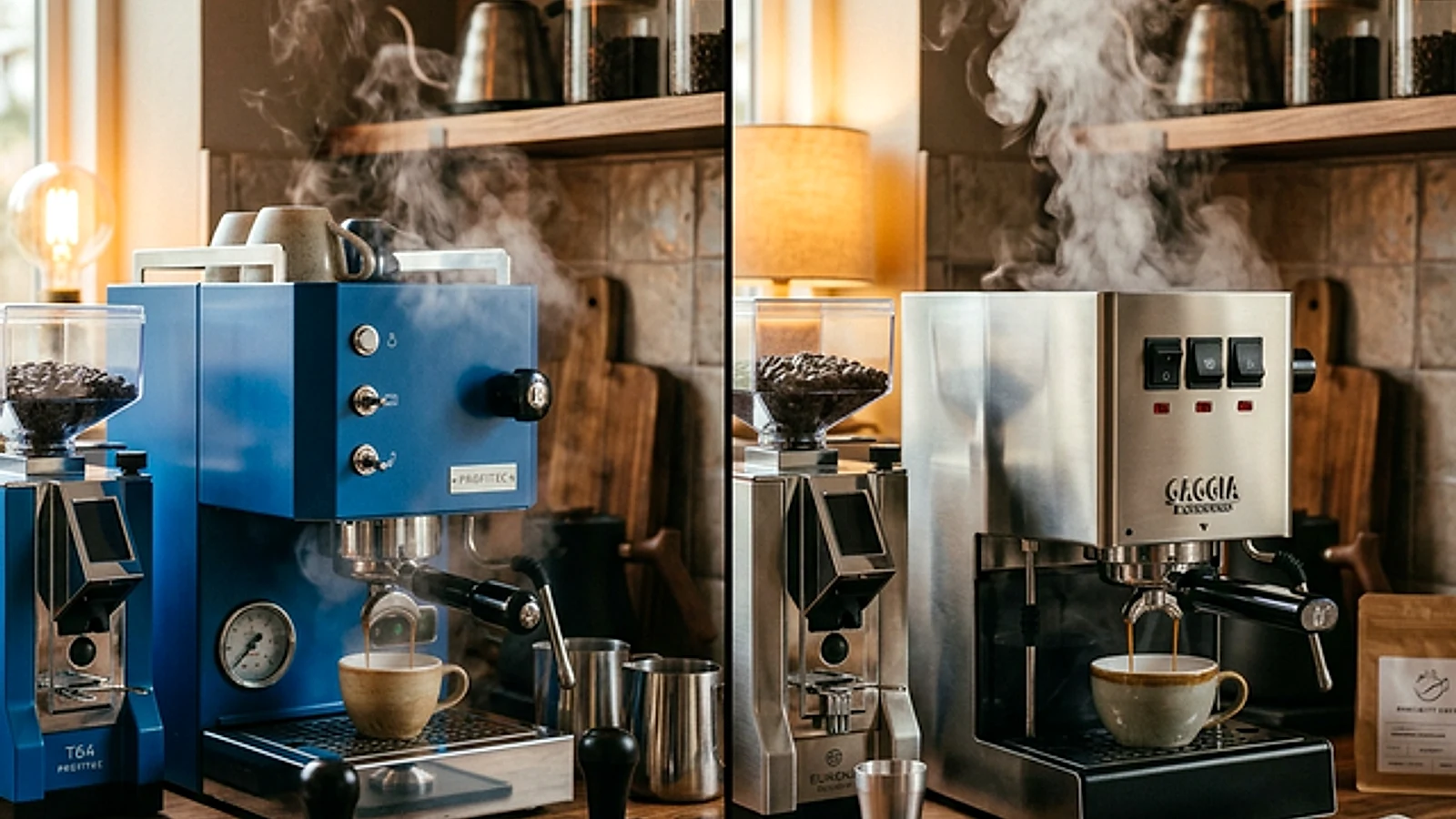
Decision Snapshot
Start With the Short Answer
Clean your espresso machine daily (purge steam wand, wipe portafilter, backflush if equipped with solenoid valve), weekly (soak basket in Cafiza, deep-clean steam wand), and monthly (descale with citric acid or manufacturer's solution).
An espresso machine is an investment — and like any investment, it needs maintenance to keep delivering returns. But
most home baristas severely under-clean their machines, causing preventable issues: bitter shots, blocked steam
wands, boiler scale, and group head gunk that ruins every cup it touches.
This guide walks through exactly how to clean an espresso machine — from the daily two-minute routine to the monthly
deep clean — with every step explained so you know why you’re doing it, not just how.
Key Takeaways

Coffee contains oils. After every shot, a thin film of rancid oil accumulates on the shower screen, inside the
portafilter basket, and along the group head gasket. Within 48 hours at room temperature, these oils oxidize and
turn bitter. If you don’t flush them away daily, every subsequent shot extracts through layers of rancid residue —
producing that characteristic harsh, ashy bitterness that plagues neglected machines.
On top of oils, the boiler and internal tubing accumulate mineral scale from your water. The SCA estimates that for
every 1mm of limescale, machine efficiency drops by 10%. Enough scale can permanently block solenoid valves, kill
heating elements, and pressure test your machine’s seals to destruction.
Daily Cleaning Routine (2–3 Minutes)
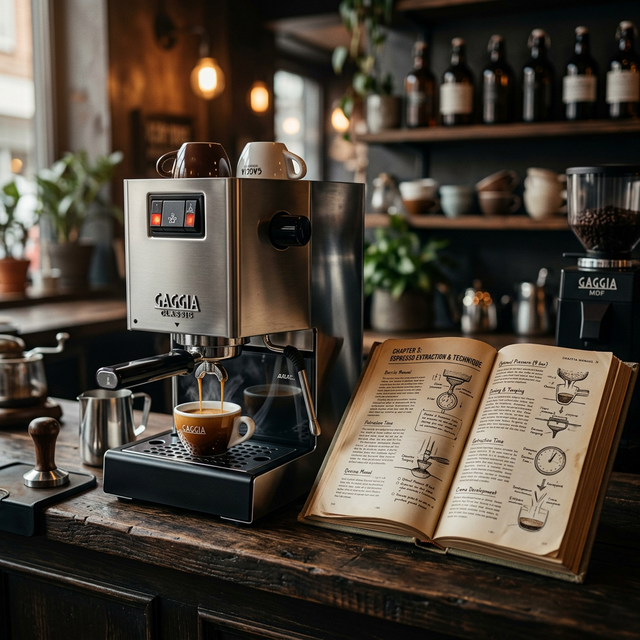
After Every Single Shot
- Knock and rinse the portafilter immediately. Don’t let the puck harden inside. Knock it out,
rinse the basket under hot water, and wipe the interior dry with a clean cloth. - Flush the group head. Run 2–3 seconds of hot water through the group head (without the
portafilter attached) after every shot. This purges fresh coffee oils and prevents the shower screen from
caking. - Wipe the steam wand immediately after use. Steam milk creates a thin dried milk crust on the
wand within minutes. Wipe it with a damp cloth immediately, then briefly open the steam valve again to expel any
residual milk that may have been sucked back in.
End-of-Day Routine
- Backflush the machine (if applicable). If your espresso machine has a 3-way solenoid valve
(most semi-automatics do), place a blind filter (a basket with no holes) in the portafilter and run backflush
cycles using a dedicated espresso machine cleaning detergent like Cafetto or Puly Caff. This pushes cleaning
detergent back up into the group head, dissolving oils from the upper seal and passages. Run 5–6 cycles. Then
repeat 5–6 cycles with clean water only to rinse all detergent out. - Remove and rinse the drip tray. Rinse it under hot water. Do not let standing coffee water sit
overnight — it becomes a breeding ground for mold. - Wipe down the exterior. Use a wrung-out microfiber cloth to wipe the group head, steam wand,
and portafilter bodies. Coffee residue on hot metal oxidizes overnight and is much harder to remove in the
morning.
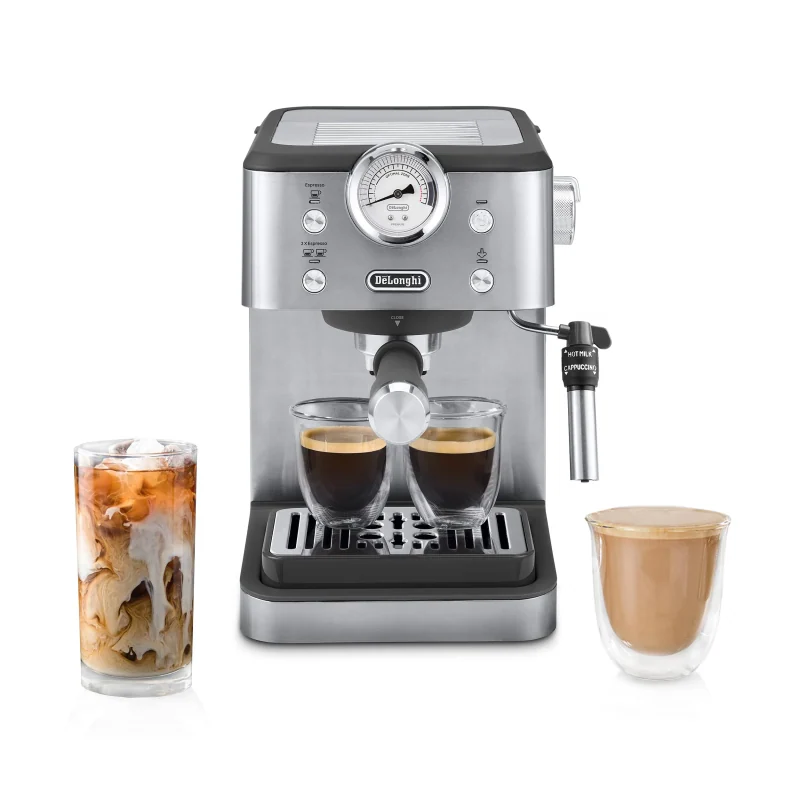
De’Longhi Classic Espresso Machine with Milk Frother
The De'Longhi Linea Classic EM450M is designed for the minimalist seeking maximum flavor. Its compact, stainless steel Italian design brings simplicity, quality, and versatility to your home espresso experience. From…
See Current OfferWeekly Cleaning Routine (15–20 Minutes)
Deep Clean the Portafilter and Basket
Even with daily rinsing, coffee oils build up in the tiny holes of the filter basket and lodge into the portafilter
spout. Once a week:
- Submerge the portafilter and basket in a container of hot water with one teaspoon of Cafetto or Puly Caff powder
dissolved in it. - Let it soak for 20–30 minutes.
- Scrub the basket holes with a small brush (a toothbrush works perfectly) and rinse thoroughly under hot water.
- Hold the basket up to a light — every hole should be completely clear. If any are blocked, soak longer.
Scrub the Shower Screen
The shower screen is the perforated metal disc at the bottom of the group head. It distributes water evenly over the
coffee puck. Remove it (typically held in place by a single screw), soak it in cleaning solution, and scrub both
sides with a brush. If it’s badly sintered with oil deposits and dark brown crust, it may need replacing — they’re
usually under $10.
Monthly Cleaning: Descaling
Descaling removes the mineral limescale from your boiler and internal tubing. Scale cannot be removed by backflushing
— it requires a dedicated descaling acid (citric acid or a commercial descaler like Durgol).
How to Descale
- Fill the water tank with the correct ratio of descaling solution mixed with water (follow your machine’s manual
— ratios vary widely). - Run roughly half the tank through the machine via the group head in 10-second bursts, pausing 30 seconds between
each burst to allow the acid to work on the heating element. - Run the remaining half through the steam wand in 5-second bursts.
- Empty the tank and refill with plain water. Run several full tanks of clean water through the machine to purge
all descaling solution. Brew 3–4 “blank” shots before brewing your first actual coffee.
Descaling frequency depends on your water hardness. With hard tap water, descale every 4–6 weeks. With a
softening filter or custom-mineralized distilled water, every 3–6 months is usually sufficient.
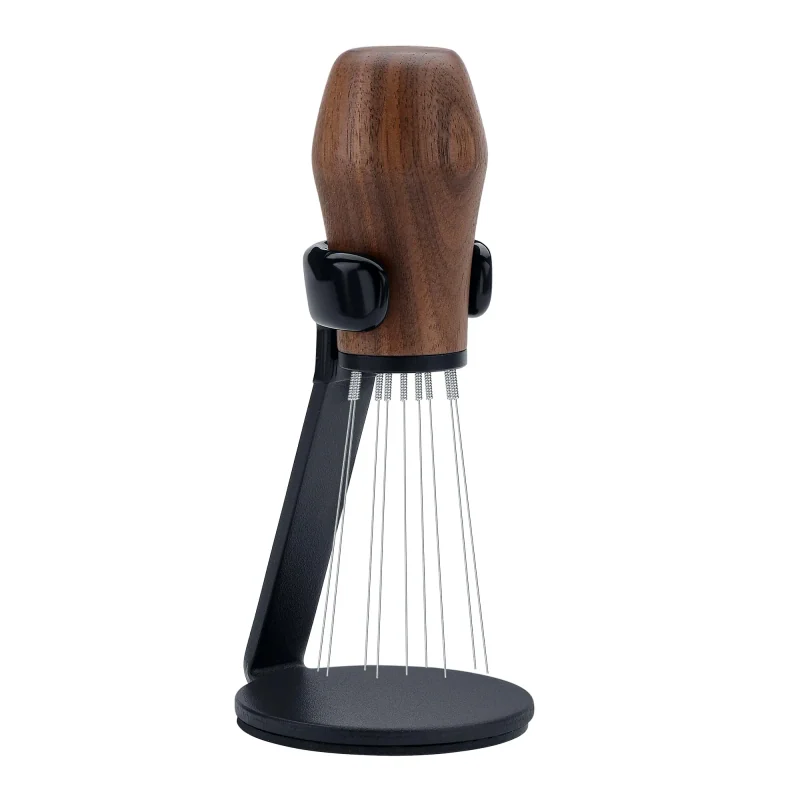
Normcore WDT Distribution Tool V3
The Normcore WDT (Weiss Distribution Technique) tool V3 is designed to improve espresso extraction consistency. Featuring nine 304 stainless steel needles, it effectively breaks up clumps in coffee grounds before…
See Current OfferCommon Cleaning Mistakes to Avoid
- Using dish soap on the portafilter: Dish soap leaves a surfactant film that ruins crema and
tastes soapy in the cup. Use dedicated espresso cleaning detergents only — never dish soap. - Skipping backflushing on machines with solenoids: If your machine has a 3-way valve (it clicks
when the pump stops), backflushing is mandatory, not optional. Skipping it causes the group head to become
coated in thick coffee oil paste. - Not rinsing after descaling: Residual descaling acid in your boiler makes the next few shots
taste sharply sour and metallic. Always rinse with at least 2 full reservoirs of plain water after descaling. - Using distilled or very soft water to “avoid scaling”: Mineral-free water corrodes brass and
stainless steel boilers. Always use SCA-balanced water.
How to Know When Your Machine Needs Professional Service
Even with perfect maintenance, machines eventually need professional attention. Signs include: the pump pressure has
dropped noticeably (check with a portafilter pressure gauge), shots take far longer or shorter to extract than they
should, the steam pressure has weakened, or the machine is leaking water around the group head seal. A professional
barista technician can replace the pump, repack the boiler seals, and replace the group head gaskets — extending
your machine’s life by decades.
What to keep stable before changing anything
How to Clean an Espresso Machine gets much easier when you stop moving every variable at once.
Keep the coffee, water, basket choice, and basic recipe stable long enough to learn what normal looks like. That boring discipline prevents most false diagnoses.
A lot of machine or maintenance panic is really a routine problem in disguise. If the setup changes every shot, you do not know whether the fix helped or whether you just got lucky once.
We keep pairing these posts with our best espresso machines under $500 because stable context solves more “machine problems” than people like to admit.
What the machine is actually telling you
How to Clean an Espresso Machine usually makes more sense once you separate a maintenance prompt from a brewing symptom.
Lights, codes, odd timings, and weak shots do not always point to the same kind of failure. Some mean clean the system. Others mean stop changing settings and return to a controlled baseline.
This is where generic forums waste a lot of time. They often jump straight to dramatic fixes before checking the simple path the machine is actually asking for.
The useful habit is to name the symptom precisely, note when it started, and keep the rest of the routine steady while you test the obvious causes first.
How to verify the fix actually worked
How to Clean an Espresso Machine is not solved just because the alert disappeared once.
Pull a confirming shot, run the same rinse or routine again, and check whether the original symptom stays gone across more than one cycle.
That extra confirmation step matters because temporary improvement is common. A rushed check is how a lot of owners end up repeating the same half-fix a week later.
If the cup still tastes wrong after the maintenance step, cross-check the brewing side with our beginner machine guide and our Barista Express vs Barista Pro guide.
When to stop guessing and escalate
How to Clean an Espresso Machine deserves escalation once the same symptom returns after the basic maintenance and routine checks are clean.
There is a point where more guessing becomes wasted time. Document the exact behavior, what you already tried, and what changed in the cup or machine response.
That record makes support or warranty help faster and stops you from looping through random forum fixes that were never matched to your machine in the first place.
Protecting your time is part of good ownership too. Not every issue should be solved by more hobbyist stubbornness.
For a wider technical reference, Specialty Coffee Association research is still worth bookmarking. For wider equipment and extraction context beyond this article, the Specialty Coffee Association research archive is a credible technical reference.
Frequently Asked Questions
Before You Buy
Narrow the field to 2 to 4 options, compare the practical tradeoffs side by side, then click through to a retailer only after the choice is clear.