

Decision Snapshot
Start With the Short Answer
The Rancilio Silvia and the Gaggia Classic Pro are the two most iconic “upgrade path” espresso machines in the enthusiast community.
The Rancilio Silvia and the Gaggia Classic Pro are the two most iconic “upgrade path” espresso machines in the
enthusiast community. Both cost around $400–500. Both use commercial-grade E61-style group heads and single boilers.
Both have passionate, decades-long communities of modders and admirers. Both will last fifteen-plus years with care.
And both will frustrate beginners in slightly different ways.
This comparison goes beyond spec sheets to tell you who each machine is actually for.
Key Takeaways

Gaggia Classic Pro
The Gaggia Classic has been manufactured continuously since 1991, making it arguably the longest-running home
espresso machine in history. The “Pro” revision (launched 2019) brought a three-way solenoid valve, a
commercial-style steam wand, and a 58mm portafilter — all crucial upgrades that transformed it from a prosumer
novelty into a genuine espresso sandbox.
The character of the Gaggia Classic Pro is best described as: mechanically honest and accessible. It doesn’t hide
anything from you. Mistakes in your grind, distribution, or tamp show up immediately in the cup — which is exactly
what makes it one of the best teaching machines available.
Rancilio Silvia
The Rancilio Silvia (named after an employee of the company) has been in production since 1997. It’s built using
commercial-grade components — the portafilter, group head, and boiler all share parts with Rancilio’s professional
range. The build quality is noticeably heavier and more industrial than the Gaggia.
The Silvia has a reputation for temperature instability without modification. The single-boiler thermostat design
oscillates significantly around the target temperature, which makes shot consistency difficult without “temperature
surfing” — the practice of carefully timing your extraction relative to the boiler’s heating cycle.
Group Head and Portafilter
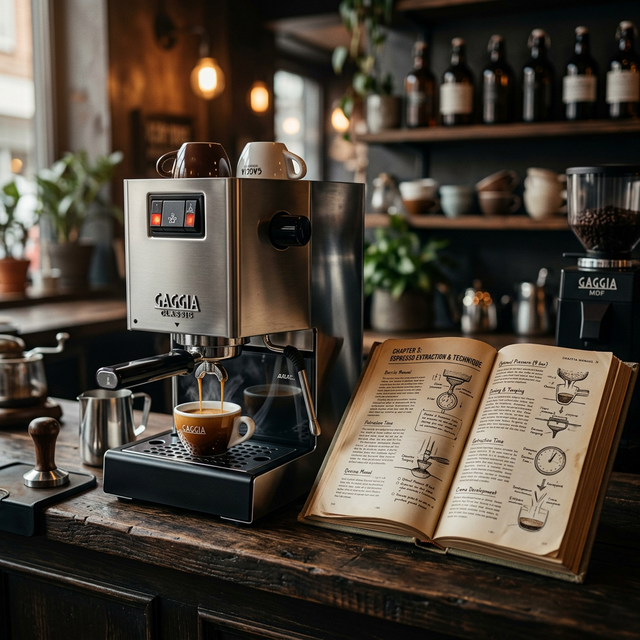
Both machines use a 58mm commercial portafilter — the same size as professional café machines from La Marzocco,
Simonelli, and Rancilio’s own commercial range. This is a significant advantage over Breville’s proprietary 54mm
portafilter: the entire professional barista accessory ecosystem (tampers, naked portafilters, precision baskets)
fits without adaptation.
Temperature Stability
This is where the machines diverge most critically. The Gaggia Classic Pro runs at a fixed brew temperature of
approximately 93°C — well within the SCA’s ideal 90.5–96°C range. It’s consistent from shot to shot.
The stock Rancilio Silvia oscillates between roughly 88°C and 102°C on a 15–20 minute duty cycle. Catching it in the
correct temperature window requires either temperature surfing (timing shots relative to the boiler light cycle) or
investing in a PID controller.
For beginners: The Gaggia Classic Pro is significantly more forgiving on temperature. You can simply
set it, let it warm up, and pull shots.
For enthusiasts willing to mod: A PID controller ($80–120) added to the Silvia transforms it into a
genuinely excellent machine with precise, stable temperature control.
Steam Power
The Rancilio Silvia has a meaningfully larger boiler (300ml vs 200ml) and produces stronger, drier steam. Experienced
baristas typically rate the Silvia’s steam as closer to commercial quality. The Gaggia Classic Pro was heavily
criticized for its steam power in earlier versions, but the “Pro” revision improved the steam wand significantly —
it now produces very acceptable microfoam for home use, though it remains somewhat weaker than the Silvia.
Build Quality and Longevity
The Silvia weighs approximately 14lbs; the Gaggia Classic Pro weighs 10lbs. The Silvia’s chassis is stainless steel
throughout. Both machines have enormous aftermarket communities producing replacement parts, upgrades, and detailed
repair guides. You will not need to throw away either machine — they’re both designed to be serviced indefinitely.
Final Verdict: Who Should Buy Each?
Technical DNA Comparison
| Feature | Rancilio Silvia Espresso Machine | Gaggia RI9380/49 Classic Evo Pro Espresso Machine, Thunder Black, Small |
|---|---|---|
| Price | $995 | $501.25 |
| Rating | ★★★★ (180) | (0) |
| See Current Offer → | See Current Offer → |
Buy the Gaggia Classic Pro if: You want to learn espresso without fighting temperature instability,
you’re not planning to modify your machine, and you want excellent out-of-the-box results with medium roast espresso
blends.
Buy the Rancilio Silvia if: You’re planning to add a PID straight away (making it one of the best
modified machines at this price point), you want stronger steam for large milk drinks, or you appreciate heavier
commercial-grade build quality and are willing to learn temperature surfing.
For current live picks and prices, browse the Espresso Insider product hub.
routine and ownership friction
Rancilio Silvia vs Gaggia Classic Pro only becomes clear when you compare what living with each option actually feels like.
Spec sheets hide the parts that annoy you every morning: heat-up rhythm, retention, noise, cleanup, refill direction, and how easy it is to recover from a bad setting move.
I have made the mistake of buying for the headline advantage and then resenting the product because the daily routine felt worse than the small taste gain justified.
That is why we keep comparing these matchups against adjacent cluster guides like our best espresso machines under $500 instead of pretending one page can replace the whole ownership decision.
Taste, drink style, and daily routine
Rancilio Silvia vs Gaggia Classic Pro should be judged by the drinks you make most often, not by comment-section mythology.
If your daily coffee is milk-heavy before work, the easier and more forgiving option can honestly be the better buy even if the enthusiast crowd prefers the more demanding tool.
If you chase straight-shot clarity, lower retention, or tighter grind control, then the extra friction can be worth it because the cup changes in a direction you will actually notice.
The mistake is acting like one winner can serve every buyer equally well. Good comparison content should split the audience on purpose.
Upgrade path and long-term fit
Rancilio Silvia vs Gaggia Classic Pro also separates based on what kind of owner you will be six months from now.
Some products stay satisfying because they keep the routine simple. Others stay satisfying because they leave more room to obsess over precision and technique. Those are different kinds of value.
There is no shame in wanting convenience. The bad move is buying the control-heavy option while secretly wanting less management, or buying the easy option while already craving a steeper learning curve.
For more context on that tradeoff, compare the related lessons in our beginner machine guide and our Barista Express vs Barista Pro guide.
Which one we would buy and why
Rancilio Silvia vs Gaggia Classic Pro needs a firm buyer split, not a vague tie.
If the routine rewards speed, lower friction, or easier recovery from mistakes, we would pick the simpler option and move on. That is not settling. That is buying for reality.
If the buyer clearly values the extra control or clarity enough to live with the tradeoffs, then the more demanding option becomes the right answer for a very specific reason.
That kind of blunt verdict is what most ranking pages avoid, but it is exactly what readers need when they are choosing with real money.
What changes once you stop reading spec sheets
Rancilio Silvia vs Gaggia Classic Pro: Which Entry-Level Legend Wins? makes more sense when you judge it the way an owner would, not the way a forum would.
Spec sheets flatten products into neat boxes, but the lived experience is messier. Warm-up rhythm, dial-in confidence, cleanup friction, and noise can outweigh a headline feature once the routine becomes normal.
That is why we are comfortable being opinionated here. A technically stronger option can still be the wrong recommendation if its daily friction is higher than the payoff for the buyer we are actually talking to.
Good comparison content should help someone spend money with fewer regrets, not just sound balanced on paper.
A realistic one-week ownership verdict
Technical DNA Comparison
| Feature | Rancilio Silvia Espresso Machine | Gaggia RI9380/49 Classic Evo Pro Espresso Machine, Thunder Black, Small |
|---|---|---|
| Price | $995 | $501.25 |
| Rating | ★★★★ (180) | (0) |
| See Current Offer → | See Current Offer → |
Rancilio Silvia vs Gaggia Classic Pro: Which Entry-Level Legend Wins? makes more sense when you judge it the way an owner would, not the way a forum would.
After a week, the strengths that looked abstract become obvious. Either the product suits the routine and quietly earns trust, or it starts to feel like another thing you have to manage before coffee.
That is the right time horizon for a comparison verdict. Not the first excited shot, but the moment where you notice whether the routine feels sensible before work on a normal Tuesday.
If a product still feels like the right call at that point, the recommendation has a much better chance of holding up long term.
For a wider technical reference, Specialty Coffee Association research is still worth bookmarking. For wider equipment and extraction context beyond this article, the Specialty Coffee Association research archive is a credible technical reference.
These active catalog matches are the current live listings worth checking while you read this comparison.

Rancilio Silvia Espresso Machine
Rancilio Silvia Espresso Machine is a semi-automatic espresso machine built around Classic Espresso: The Silvia has been in production for over 20 years-- making it one of the most stable espresso platforms on the…
See Current Offer
Gaggia RI9380/49 Classic Evo Pro Espresso Machine, Thunder Black, Small
Gaggia RI9380/49 Classic Evo Pro Espresso Machine, Thunder Black, Small is a semi-automatic espresso machine built around Solid Steel Housing, Made in Italy, 9 Bar Espresso Extractions, GTIN: 075020090645. This looks…
See Current OfferFrequently Asked Questions
Before You Buy
Narrow the field to 2 to 4 options, compare the practical tradeoffs side by side, then click through to a retailer only after the choice is clear.