
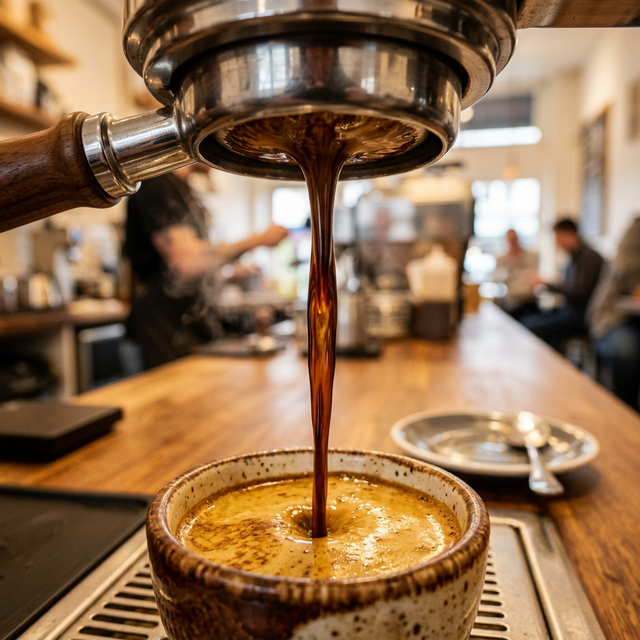
Expert Overview
Key Takeaways
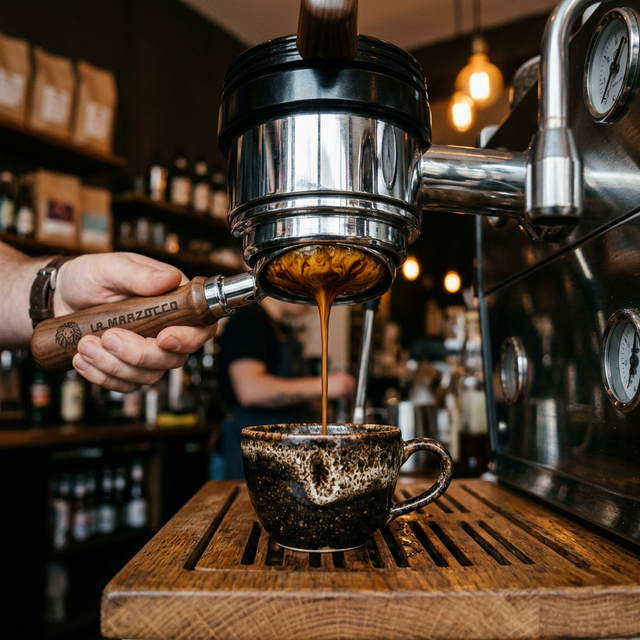
- The Golden Ratio: The standard recipe for modern espresso is a 1:2 ratio. For an 18g dose of ground coffee, you want to yield 36g of liquid espresso.
- Timing matters: A standard double shot should finish extracting its 36g yield in roughly 25 to 30 seconds.
- Dialing in is mandatory: You must adjust your grinder slightly for every new bag of coffee to hit your extraction parameters.
- Use a scale: Pulling shots by eye or volume (ounces) is inaccurate due to crema thickness. Using a digital scale under your cup is the single fastest way to improve your espresso.
The Fundamentals: Dose, Yield, and Time
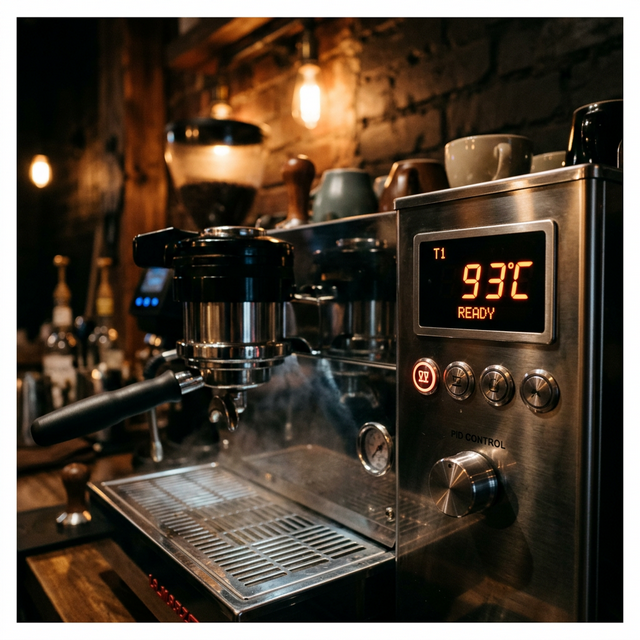
Pulling a perfect espresso shot is not magic; it is a straightforward recipe governed by three specific variables: Dose, Yield, and Time. If you control these three factors, you will pull better espresso than 90% of local coffee shops.
1. Dose (What goes in)
The dose is the dry weight of your ground coffee. Most modern double baskets are designed for 18 grams of coffee. You should weigh this exactly. A variation of even 0.5g will dramatically change how water flows through the puck.
2. Yield (What comes out)
The yield is the total liquid weight of your brewed espresso. The industry standard starting point is a 1:2 ratio. Therefore, 18g of dry coffee should yield 36g of liquid espresso. You measure this by placing your cup on a small digital scale while brewing.
3. Time (How long it takes)
The time is the duration of the shot from the moment you press the brew button to the moment you stop it at your target yield. The sweet spot for a 1:2 ratio is generally between 25 and 30 seconds.
Step-by-Step: The Perfect Workflow
Follow these exact steps every time you approach your machine. Consistency in preparation leads to consistency in the cup.
Step 1: Prep and Preheat
Ensure your machine has been turned on for at least 20 minutes so the portafilter and group head are piping hot. Flush a small amount of water through the group to purge stale water.
Step 2: Weigh and Grind
Place your portafilter on your scale, zero it out, and dose exactly 18.0g of coffee. Use an espresso-capable grinder like the Baratza Encore ESP.
Step 3: Distribute (WDT)
Use a WDT tool (Weiss Distribution Technique) to stir the grounds in the basket. The fine needles break up clumps generated by the grinder and ensure the coffee bed is uniformly dense. This prevents channeling (water finding a path of least resistance).
Step 4: Tamp Level
Tamping removes the air pockets between coffee particles. Rest the portafilter on a tamping mat and apply firm, perfectly level downward pressure. The exact pounds of pressure does not matter as long as the coffee is fully compressed; being perfectly level is critical.
Step 5: Extract and Measure
Lock the portafilter into the machine. Place your cup and scale on the drip tray, tare the scale to zero, and start a timer the moment you engage the pump. Watch the scale closely and stop the pump when it reads 34g (an extra gram or two will drip out to hit your 36g target).
Diagnosing Your Shot
If you hit 36g in exactly 28 seconds, taste the shot. If it tastes sour and thin, it is under-extracted. If it tastes harsh, dry, and bitter, it is over-extracted.
| Shot Time to hit 36g | Diagnosis | The Fix (Grind Adjustment) | Taste Profile |
|---|---|---|---|
| < 20 Seconds | Channeled / Watery | Grind Finer | Sour, weak, acidic |
| 25 - 30 Seconds | The Sweet Spot | Keep setting, adjust to taste | Balanced sweetness |
| > 40 Seconds | Choked / Restricted | Grind Coarser | Bitter, harsh, astringent |
Sources & Further Reading
To dive deeper into the science and standards discussed in this article, we recommend reviewing the formal research provided by the Specialty Coffee Association (SCA) Research.
Our Take
Pulling the perfect espresso shot requires abandoning guesswork. Treat espresso like baking rather than cooking — use scales, follow ratios, and change only one variable at a time.
Start with the 1:2 ratio in 25-30 seconds. Once you can hit that target consistently, you have mastered the mechanical aspect of extraction. From there, you can begin tweaking the recipe to highlight the specific bright acidity of a light roast or the chocolatey depths of a traditional Italian blend.
How this changes by setup and roast
How to Pull the Perfect Espresso Shot behaves differently depending on the coffee, basket, and drink goal in front of you.
A medium-dark milk-drink recipe rarely wants the same correction as a light roast you are drinking straight. The principle may stay the same, but the visible symptom and the best next move often change.
This is where a lot of search results flatten useful nuance into one universal rule. Espresso almost never behaves that cleanly in real kitchens.
That is why we keep steering readers toward our perfect shot guide and our sour espresso troubleshooting guide for connected context rather than one isolated trick.
Real cup examples that reveal the problem faster
How to Pull the Perfect Espresso Shot gets easier once you connect it to taste and texture instead of abstract theory.
If the cup is thin, sharp, and disappears in milk, that points to a very different next test than a heavy shot that tastes dry and flat.
Espresso is full of mixed signals, which is why visual perfection can mislead you. I learned that the hard way after chasing puck appearance instead of listening to the cup.
The practical move is to keep one baseline recipe and compare the result honestly before changing another variable.
What top results often miss
How to Pull the Perfect Espresso Shot is usually under-explained by pages that define the concept but stop short of showing what to do next.
Readers do not just need vocabulary. They need a clean sequence for testing, a way to rule out false diagnoses, and a sense of which problems are not actually worth solving with more gear.
That is why we care about workflow and use-case framing here. The theory only matters if it helps the next shot taste better.
If you want a direct next step, work through our temperature stability guide with a notebook and one controlled change.
What to test next
How to Pull the Perfect Espresso Shot becomes much more useful once you run one disciplined experiment instead of five random tweaks.
Change one variable, pull two confirming shots, and write down what changed in sweetness, bitterness, body, and finish. That notebook habit feels nerdy until you realize how much coffee it saves.
The strongest home barista move is not memorizing more advice. It is learning how to isolate a change cleanly enough that the cup can actually teach you something.
That is the difference between reading espresso content and getting better at espresso.
A practical home test plan
How to Pull the Perfect Espresso Shot: The Complete Extraction Guide becomes more useful when the concept turns into a repeatable home test instead of extra theory.
Keep the setup steady and run one controlled change at a time. That might mean adjusting yield, grind size, water choice, milk texture, or one maintenance step, but it should not mean changing all of them together.
Then write down what happened in the cup. Sweetness, bitterness, body, clarity, and finish are the signals that matter. When you capture those consistently, the lesson becomes practical instead of abstract.
This is also the fastest way to stop wasting coffee chasing contradictory advice that was never tested in your setup.
How to know the lesson actually stuck
How to Pull the Perfect Espresso Shot: The Complete Extraction Guide becomes more useful when the concept turns into a repeatable home test instead of extra theory.
The idea has really landed when you can notice the problem earlier and fix it with fewer steps. That is the real measure of useful espresso guidance, not whether the explanation sounded clever on first read.
Once the routine is calmer, you also become harder to mislead by hype or by small visual changes that do not actually improve the drink.
That is the kind of progress content should create: less noise, clearer decisions, and better coffee with less thrashing.