
Decision Snapshot
Start With the Short Answer
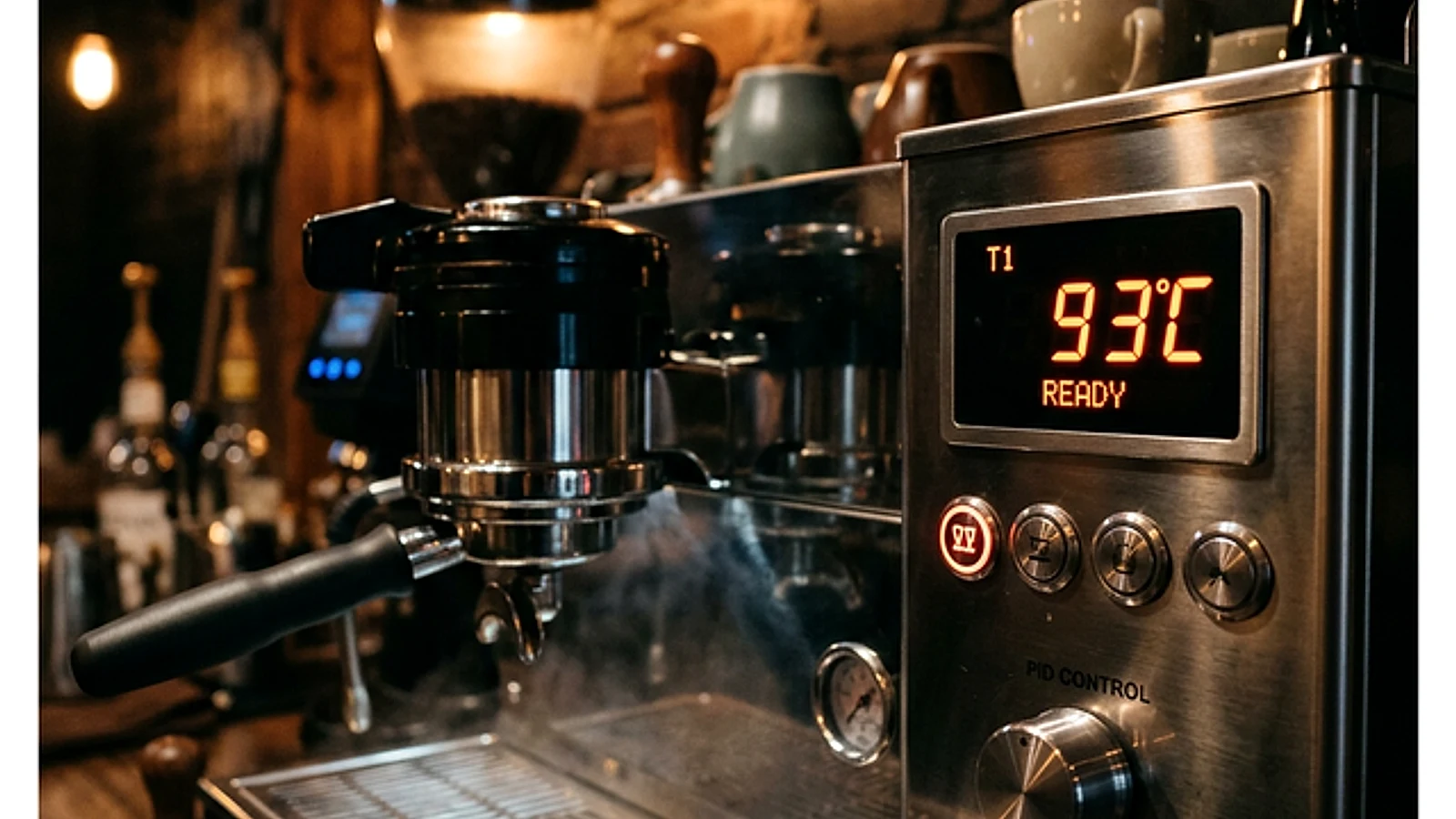
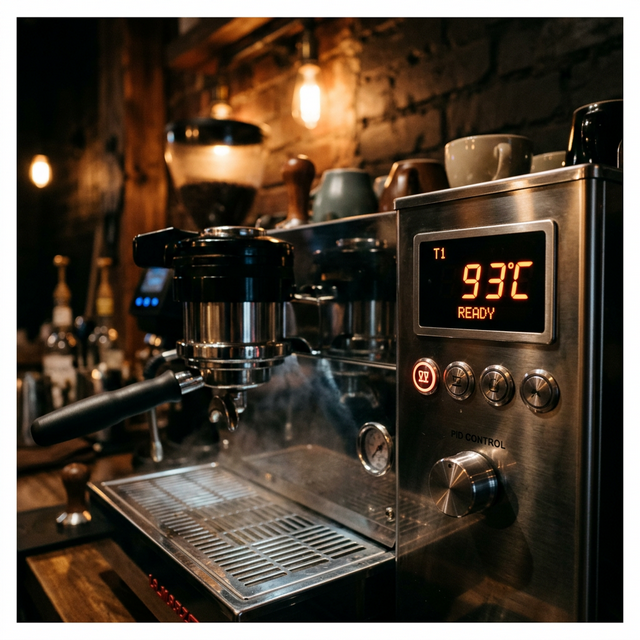
Temperature stability is the hidden variable that ruins perfect puck prep. Learn how modern espresso machines use PID controllers to maintain the optimal 200°F brewing temperature for consistent, café-quality shots.
When espresso tastes bright one shot and flat the next, baristas often blame grind size first. Sometimes that is correct. But temperature stability is often the quieter culprit, especially on home machines that need longer warm-up or a more disciplined brew routine.
Key Takeaways
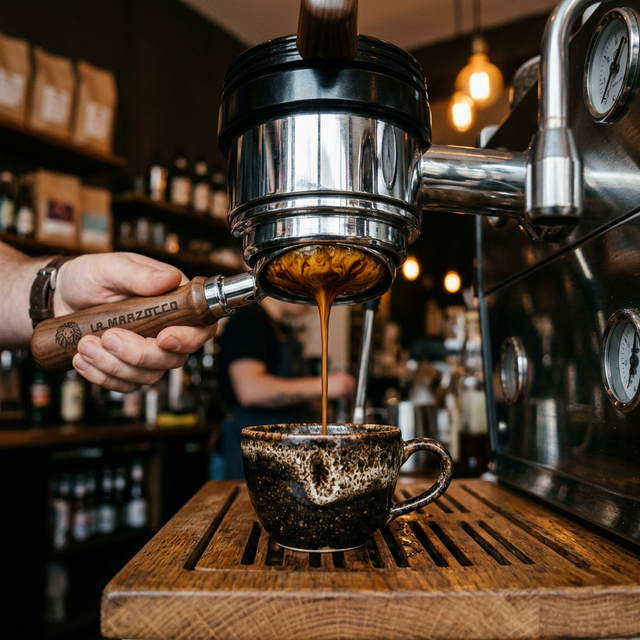
Once your machine is thermally stable, the next variable to lock down is puck prep. Use our step-by-step dial-in method alongside this grind size guide so temperature changes are not masking a grind problem.
- Temperature stability matters because even small shifts can change how quickly acids, sugars, and bitterness extract.
- Warm-up time, boiler design, and shot cadence matter more than sticker claims about bar pressure.
- A stable machine still needs consistent puck prep and a repeatable flush routine to perform well.
- Most home users get better consistency from routine discipline before they need machine upgrades.
Quick Reference
Temperature stability matters because even small shifts can change how quickly acids, sugars, and bitterness extract. Use this table as the fast answer before you work through the full guide.
| Source Of Drift | What It Changes | Practical Fix |
|---|---|---|
| Short warm-up | Cold group and unstable shot start | Preheat longer and run a blank shot |
| Back-to-back steaming | Boiler temperature swings | Let the machine recover before the next shot |
| Inconsistent flush routine | Shot starts at different heat levels | Use one repeatable prep routine |
| Messy puck prep | Masks temperature diagnosis | Keep dose and distribution steady |
Why Temperature Stability Changes Flavor
A machine that starts too cool or drifts during the shot changes extraction balance even when grind and dose stay constant.
Cooler starts often emphasize acidity and reduce body, while overheated starts can flatten sweetness and pull bitterness forward. On a home machine, these shifts usually show up as inconsistency: one espresso feels balanced and the next tastes oddly sharp without an obvious grind change.
That is why experienced baristas treat temperature stability as a routine issue as much as a hardware issue. A great puck on a poorly prepared machine still produces unstable results.
Machine Design And Warm-Up Habits
Boiler size, thermoblock design, and the thermal mass of the group all influence how much patience a machine needs.
Single-boiler classics can be extremely capable, but they demand enough warm-up time for the group, portafilter, and basket to catch up with the boiler. Compact heat-up claims are often about indicator lights, not the full brew path.
A predictable blank-shot routine before the first espresso usually helps more than obsessive temperature theory. It evens out the start of extraction and makes later adjustments easier to interpret.

Gaggia RI9380/46 E24 Espresso Machine
Gaggia RI9380/46 E24 Espresso Machine is a semi-automatic espresso machine built around Solid Steel Housing, Made in Italy, 9 Bar Espresso Extractions, GTIN: 075020080950. This fallback profile stays grounded in the…
See Current Offer
Rancilio Silvia Espresso Machine
Rancilio Silvia Espresso Machine is a semi-automatic espresso machine built around Classic Espresso: The Silvia has been in production for over 20 years-- making it one of the most stable espresso platforms on the…
See Current Offerroutine Habits That Improve Stability
Consistent recovery time, a repeatable flush, and disciplined puck prep matter every bit as much as machine spec sheets.
If you steam milk and then rush straight into the next shot, you are asking the machine to do too many thermal jobs at once. Give it a short recovery window, reset with your normal prep routine, and then pull the next espresso.
Keep dose, distribution, and tamp consistent so you can actually tell when temperature is the variable. Otherwise a bad puck will disguise a thermal problem and send you chasing the wrong fix.
When Stability Problems Justify An Upgrade
Upgrade when your routine is disciplined and the machine still drifts more than your use case will tolerate.
If you have already cleaned the machine, stabilized your warm-up, and simplified your shot sequence, then persistent instability becomes a real equipment limit instead of a technique problem. That matters most if you drink lighter roasts or care about narrow flavor windows.
For many home users, though, the fastest gains come from better preheating, better water habits, and better shot pacing rather than from buying a more expensive platform immediately.
For a standards-based reference, the Specialty Coffee Association is useful for terminology and brewing benchmarks. If you are still deciding whether your setup is the limiting factor, compare machines and routine tools in our products hub before chasing stability with random upgrades.
Final Takeaway
Temperature stability is one of the clearest examples of espresso rewarding steady habits. Good machines help, but repeatable warm-up, recovery, and puck prep usually deliver the first major improvement.
If you are still diagnosing uneven cups after fixing heat habits, continue with our grind size guide so you can separate thermal issues from grinder issues more cleanly.
How this changes by setup and roast
Temperature Stability In Espresso behaves differently depending on the coffee, basket, and drink goal in front of you.
A medium-dark milk-drink recipe rarely wants the same correction as a light roast you are drinking straight. The principle may stay the same, but the visible symptom and the best next move often change.
This is where a lot of search results flatten useful nuance into one universal rule. Espresso almost never behaves that cleanly in real kitchens.
That is why we keep steering readers toward our perfect shot guide and our sour espresso troubleshooting guide for connected context rather than one isolated trick.
Real cup examples that reveal the problem faster
Temperature Stability In Espresso gets easier once you connect it to taste and texture instead of abstract theory.
If the cup is thin, sharp, and disappears in milk, that points to a very different next test than a heavy shot that tastes dry and flat.
Espresso is full of mixed signals, which is why visual perfection can mislead you. I learned that the hard way after chasing puck appearance instead of listening to the cup.
The practical move is to keep one baseline recipe and compare the result honestly before changing another variable.
What top results often miss
Temperature Stability In Espresso is usually under-explained by pages that define the concept but stop short of showing what to do next.
Readers do not just need vocabulary. They need a clean sequence for testing, a way to rule out false diagnoses, and a sense of which problems are not actually worth solving with more gear.
That is why we care about routine and use-case framing here. The theory only matters if it helps the next shot taste better.
If you want a direct next step, work through our temperature stability guide with a notebook and one controlled change.
What to test next
Temperature Stability In Espresso becomes much more useful once you run one disciplined experiment instead of five random tweaks.
Change one variable, pull two confirming shots, and write down what changed in sweetness, bitterness, body, and finish. That notebook habit feels nerdy until you realize how much coffee it saves.
The strongest home barista move is not memorizing more advice. It is learning how to isolate a change cleanly enough that the cup can actually teach you something.
That is the difference between reading espresso content and getting better at espresso.
A practical home test plan
Temperature Stability In Espresso: Complete Guide becomes more useful when the concept turns into a repeatable home test instead of extra theory.
Keep the setup steady and run one controlled change at a time. That might mean adjusting yield, grind size, water choice, milk texture, or one maintenance step, but it should not mean changing all of them together.
Then write down what happened in the cup. Sweetness, bitterness, body, clarity, and finish are the signals that matter. When you capture those consistently, the lesson becomes practical instead of abstract.
This is also the fastest way to stop wasting coffee chasing contradictory advice that was never tested in your setup.
Frequently Asked Questions
Before You Buy
Narrow the field to 2 to 4 options, compare the practical tradeoffs side by side, then click through to a retailer only after the choice is clear.