
Article Snapshot
What Matters First
Sour espresso is caused by under-extraction — water hasn't dissolved enough sweet compounds from the coffee. Other causes: dose too low, water too cold, stale beans, channeling (uneven distribution), or brew ratio too short.
Key Takeaways
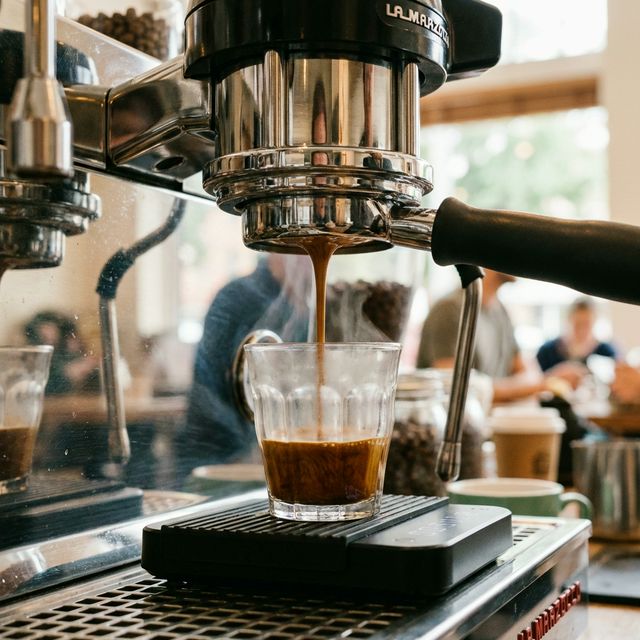
If your espresso tastes sour, sharp, or lip-puckeringly acidic, you have one problem: under-extraction. Water hasn't dissolved enough of the coffee's soluble material — specifically, it missed the sweet and complex compounds that balance out the early-extracting acids.
Think of extraction like a timeline: acids dissolve first (sour), then sugars (sweet), then heavy compounds (bitter). A sour shot means you're only capturing the first chapter. You need to extract further into the sweet zone. Here are the 6 causes, in order of likelihood, and exactly how to fix each one.
Cause 1: Grind Too Coarse (Most Common)
Why it causes sourness: Coarse particles have less surface area, and they create less resistance in the portafilter. Water flows through too fast (under 20 seconds) without dissolving enough flavor compounds.
The fix: Grind 1-2 micro-steps finer. Pull another shot. If still sour, grind 1 more step finer. Repeat until the shot tastes sweet and balanced. According to Barista Hustle's extraction research, grind size accounts for the majority of extraction variation. For a complete guide, see our grind size guide.
Cause 2: Dose Too Low
Why: If you're using 14-15g in an 18g basket, the puck is too thin. Water channels through with minimal resistance, under-extracting everything.
The fix: Use the recommended dose for your basket. For most double baskets, that's 18g (±0.5g). Weigh every time — eyeballing dose is surprisingly inaccurate.
Cause 3: Water Temperature Too Low
Why: Cold water lacks the thermal energy to dissolve flavor compounds efficiently. Below 90°C, extraction drops significantly regardless of grind.
The fix: If your machine has PID, set to 93°C for medium roasts, 94-96°C for light roasts. Without PID: run a blank shot to flush cold water before extracting. Many machines run cold for the first shot of the day.
Cause 4: Stale Beans
Why: Beans older than 4 weeks have lost CO2 and volatile flavor compounds. The remaining solubles skew acidic and flat. No amount of grind adjustment will make stale beans taste sweet.
The fix: Use beans 7-21 days post-roast. Check the roast date on the bag. "Best before" dates are not roast dates — fresh-roasted specialty beans will show the actual roast date. For bean selection, see our beginner beans guide.
Cause 5: Channeling (Uneven Extraction)
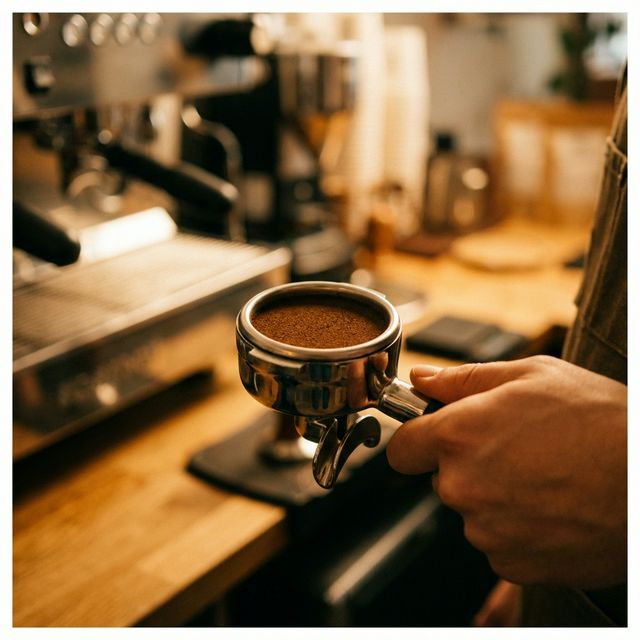
Why: If coffee is unevenly distributed in the basket, water finds the path of least resistance — creating channels where water rushes through (under-extracting) while other areas get saturated. The overall shot tastes sour because most of the liquid is under-extracted channel water.
The fix: Use a WDT (Weiss Distribution Technique) tool to break clumps and distribute grounds evenly before tamping. Then tamp level. Channeling is the most insidious cause because the shot might look fine but taste terrible. For the full technique, check our puck prep guide.
Cause 6: Brew Ratio Too Short
Why: Some beans — especially light roasts — simply need more water contact to develop sweetness. At a standard 1:2 ratio, they may still taste acidic because not enough soluble material has been dissolved.
The fix: Try extending your ratio to 1:2.5 (18g in, 45g out). This gives water more time to dissolve the sweet compounds. If sourness persists even at 1:2.5, the issue is probably grind or temperature, not ratio. For more on ratios, see our ratio guide.
Quick Diagnostic Flowchart
| Check | Issue | Fix |
|---|---|---|
| Extraction time under 20s? | Grind too coarse | Grind 1-2 steps finer |
| Dose under 17g? | Dose too low | Increase to 18g |
| First shot of day? | Machine cold | Flush, let machine warm up |
| Beans over 4 weeks old? | Stale beans | Buy fresh (7-21 days) |
| Sour AND bitter? | Channeling | Improve distribution (WDT) |
| Light roast? | Needs more extraction | Try 1:2.5 ratio |
How this changes by setup and roast
Why Is My Espresso Sour? 6 Causes and How to Fix Each One behaves differently depending on the coffee, basket, and drink goal in front of you.
A medium-dark milk-drink recipe rarely wants the same correction as a light roast you are drinking straight. The principle may stay the same, but the visible symptom and the best next move often change.
This is where a lot of search results flatten useful nuance into one universal rule. Espresso almost never behaves that cleanly in real kitchens.
That is why we keep steering readers toward our perfect shot guide and our sour espresso troubleshooting guide for connected context rather than one isolated trick.
Real cup examples that reveal the problem faster
Why Is My Espresso Sour? 6 Causes and How to Fix Each One gets easier once you connect it to taste and texture instead of abstract theory.
If the cup is thin, sharp, and disappears in milk, that points to a very different next test than a heavy shot that tastes dry and flat.
Espresso is full of mixed signals, which is why visual perfection can mislead you. I learned that the hard way after chasing puck appearance instead of listening to the cup.
The practical move is to keep one baseline recipe and compare the result honestly before changing another variable.
What top results often miss
Why Is My Espresso Sour? 6 Causes and How to Fix Each One is usually under-explained by pages that define the concept but stop short of showing what to do next.
Readers do not just need vocabulary. They need a clean sequence for testing, a way to rule out false diagnoses, and a sense of which problems are not actually worth solving with more gear.
That is why we care about routine and use-case framing here. The theory only matters if it helps the next shot taste better.
If you want a direct next step, work through our temperature stability guide with a notebook and one controlled change.
What to test next
Why Is My Espresso Sour? 6 Causes and How to Fix Each One becomes much more useful once you run one disciplined experiment instead of five random tweaks.
Change one variable, pull two confirming shots, and write down what changed in sweetness, bitterness, body, and finish. That notebook habit feels nerdy until you realize how much coffee it saves.
The strongest home barista move is not memorizing more advice. It is learning how to isolate a change cleanly enough that the cup can actually teach you something.
That is the difference between reading espresso content and getting better at espresso.
A practical home test plan
Why Is My Espresso Sour? 6 Causes and How to Fix Each One becomes more useful when the concept turns into a repeatable home test instead of extra theory.
Keep the setup steady and run one controlled change at a time. That might mean adjusting yield, grind size, water choice, milk texture, or one maintenance step, but it should not mean changing all of them together.
Then write down what happened in the cup. Sweetness, bitterness, body, clarity, and finish are the signals that matter. When you capture those consistently, the lesson becomes practical instead of abstract.
This is also the fastest way to stop wasting coffee chasing contradictory advice that was never tested in your setup.
How to know the lesson actually stuck
Why Is My Espresso Sour? 6 Causes and How to Fix Each One becomes more useful when the concept turns into a repeatable home test instead of extra theory.
The idea has really landed when you can notice the problem earlier and fix it with fewer steps. That is the real measure of useful espresso guidance, not whether the explanation sounded clever on first read.
Once the routine is calmer, you also become harder to mislead by hype or by small visual changes that do not actually improve the drink.
That is the kind of progress content should create: less noise, clearer decisions, and better coffee with less thrashing.
How to know the lesson actually stuck
Why Is My Espresso Sour? 6 Causes and How to Fix Each One becomes more useful when the concept turns into a repeatable home test instead of extra theory.
The idea has really landed when you can notice the problem earlier and fix it with fewer steps. That is the real measure of useful espresso guidance, not whether the explanation sounded clever on first read.
Once the routine is calmer, you also become harder to mislead by hype or by small visual changes that do not actually improve the drink.
That is the kind of progress content should create: less noise, clearer decisions, and better coffee with less thrashing.